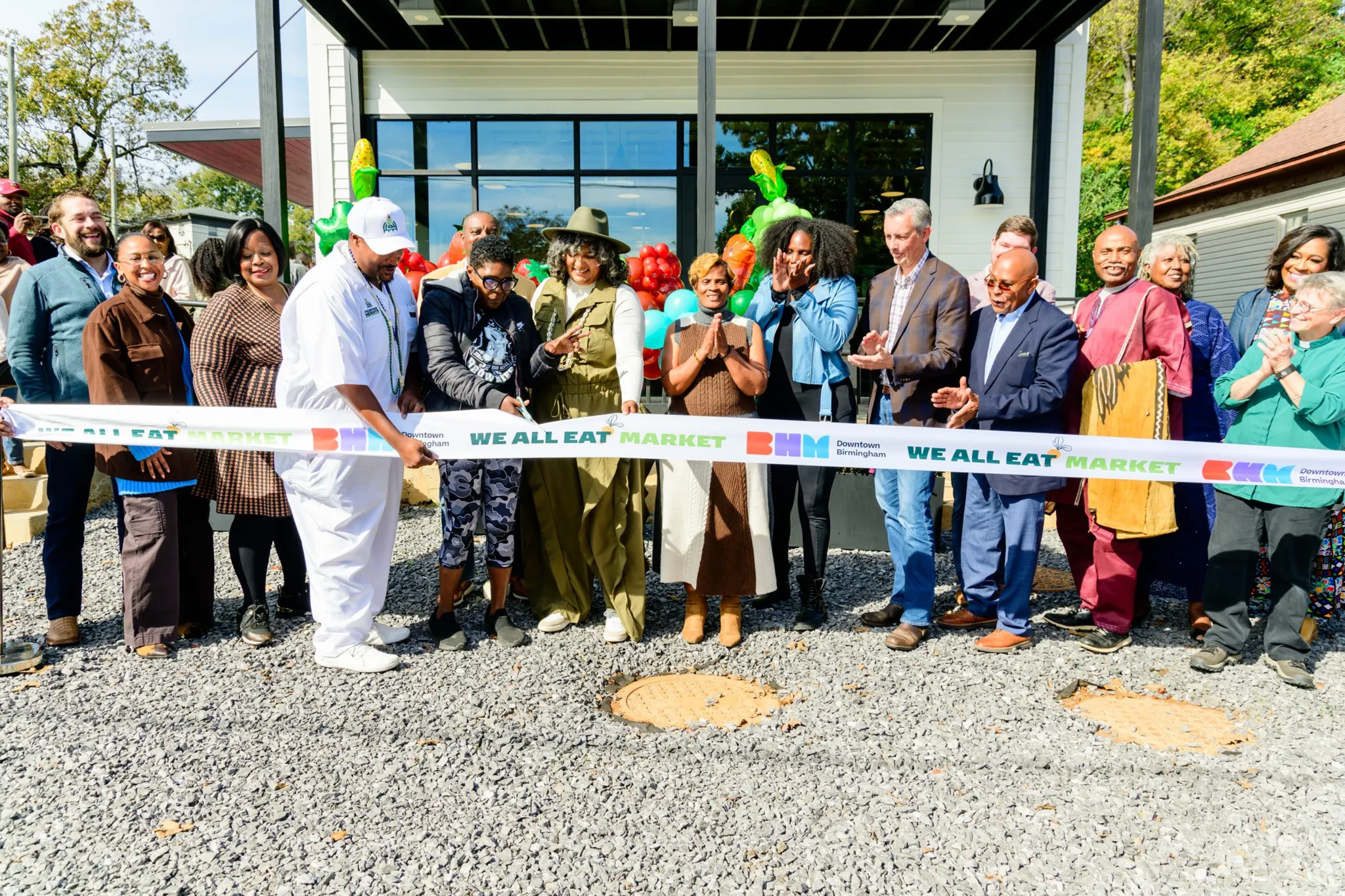
‘We Deserve It’: In Birmingham, Black Farmers Open Fountain Heights’ First Grocery Store in 70 years
By Shauna Stuart | For the Birmingham Times For the first time in nearly 70 years, Birmingham’s Fountain Heights neighborhood has a grocery store of its own. The Fountain Heights Farms Cooperative,…
AI summary
The Fountain Heights Farms Cooperative, a Black-owned urban farm and food sovereignty collective founded in 2016 by M. Dominique Villanueva and Christopher Gooden, opened its We All Eat Market and community kitchen on Nov. 7. The article describes it as the Birmingham neighborhood's first grocery store in nearly 70 years. The market sells organic-focused dry goods, bulk items, toiletries and produce from the cooperative's plots and other Alabama farmers. It accepts SNAP and Double Up Bucks. It is housed in "The Heart of the Farm," a building that also contains a commercial kitchen, an office and volunteer lodging. The opening featured a block party and a ceremony where local officials pledged funds. The article recounts the cooperative's growth from a front-yard garden and a free stand to 16 plots, with a goal of 119 by 2030. It attributes the neighborhood's limited food options to decades of disinvestment, housing discrimination and I-65's construction. Speakers praised the founders, and Urban Impact's CEO said he sees possible collaboration with its new culinary incubator.
- We All Eat Market, opened Nov. 7 by Fountain Heights Farms Cooperative, is described as Fountain Heights' first grocery store in nearly 70 years; it accepts SNAP and Double Up Bucks.
- The market sits in "The Heart of the Farm," which also includes a commercial kitchen for local culinary workers, an office and temporary lodging for volunteers.
- County Commissioner Sheila Tyson pledged $25,000 and City Councilor LaTonya Tate pledged $40,000 at the opening.
- Founded in 2016 from a front-yard garden, the cooperative now has 16 plots, aims for 119 by 2030, and has received grants including two of $50,000 each.
- The article links the area's limited food access to disinvestment, housing discrimination and I-65's construction; Urban Impact hopes to collaborate through its INSPIRE incubator.