‘The Sacred Ordinary’ Uses Public Art to Keep Birmingham’s Civil Rights History Alive
By Sym Posey | The Birmingham Times Birmingham’s civil rights history is etched into its streets, buildings and public spaces. But as generations of movement foot soldiers pass away and the…
AI summary
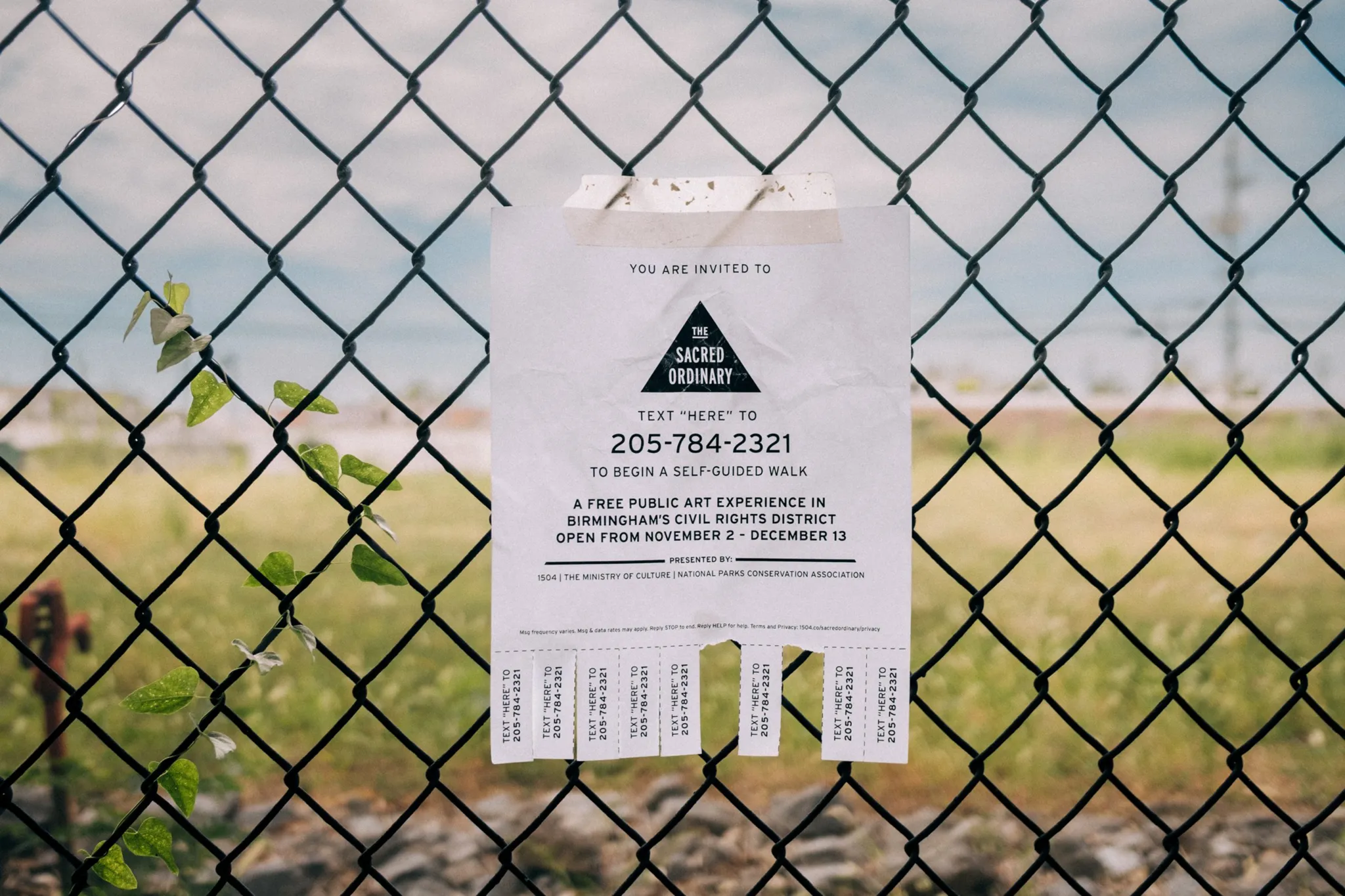
The Sacred Ordinary is a new public art installation in Birmingham's Civil Rights District that uses illuminated everyday objects and sound to help visitors engage with the city's civil rights history. Produced by the narrative studio 1504, presented by the Ministry of Culture and created with the National Parks Conservation Association, it runs Nov. 2 through Dec. 13. The free, self-guided nighttime walk of about 30 minutes starts at Kelly Ingram Park and is open nightly from 5 to 8 p.m. Visitors begin by texting "HERE" to (205) 784-2321. Newspaper vending machines, postal boxes and dumpsters light up after dark at historic locations, and actor André Holland introduces the narration. Director Tyler Jones says the project was partly inspired by artist Joe Minter. He describes its timing as urgent because many movement participants are passing away. Its message is "We preserve what we value," and it asks the public to share responsibility for preservation as historic signage faces challenges. A related free panel on the future of historical interpretation was held Nov. 9 at the 16th Street Education & Visitors Center.
- The free installation runs nightly from 5 to 8 p.m. through Dec. 13 as a roughly 30-minute self-guided walk starting at Kelly Ingram Park; visitors begin by texting "HERE" to (205) 784-2321.
- Everyday civic objects such as newspaper boxes, postal boxes and dumpsters blend in by day and illuminate at night to mark historic locations, with narration introduced by actor André Holland.
- Director Tyler Jones says the project was inspired in part by artist Joe Minter and that every generation must recommit to preserving history as movement participants pass away.
- Under the message "We preserve what we value," Jones argues that markers and memorials cannot be the only means of sustaining public memory and that art and the public have a role to play.
- A related free panel, "Beyond Signage — The Future of History in Birmingham's Civil Rights District," was held Nov. 9 at the 16th Street Education & Visitors Center.