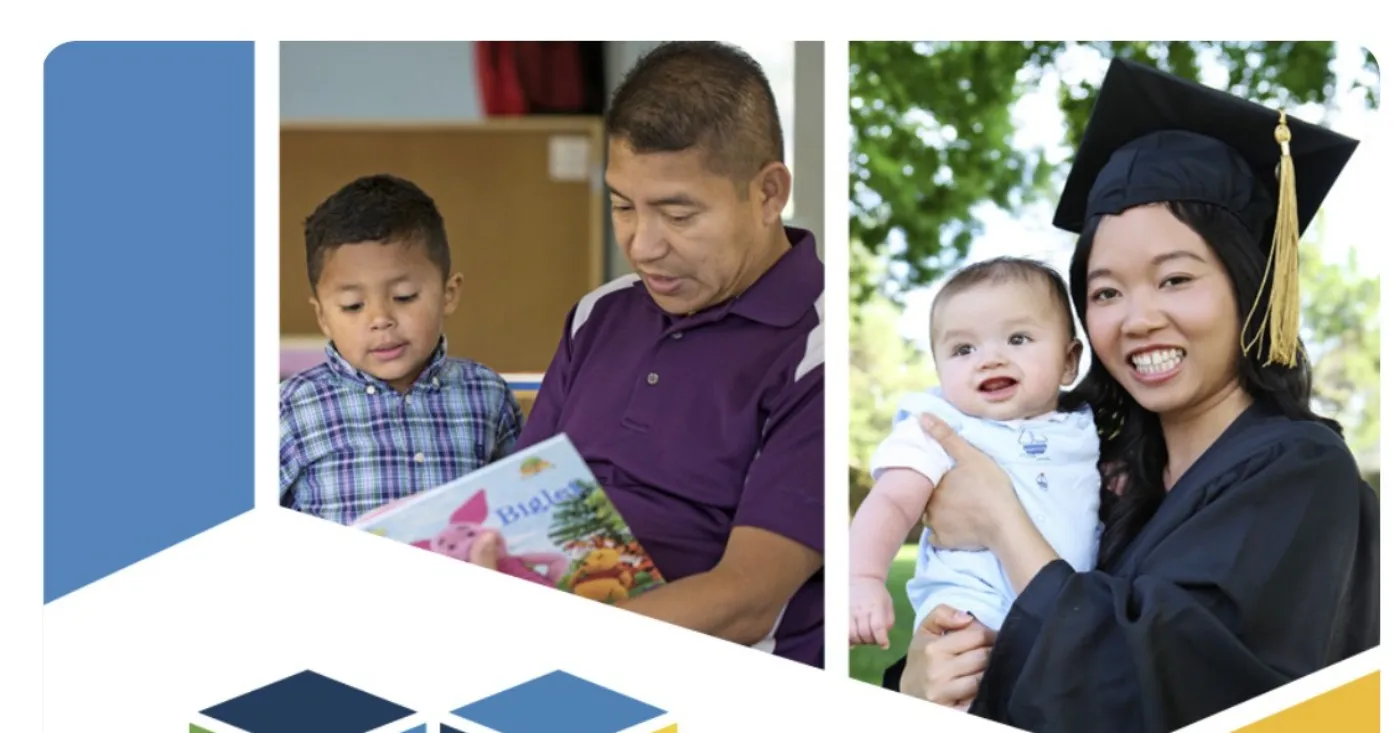
Kids on Campus: Success in Learning Together
The Association of Community College Trustees and the National Head Start Association have released the second annual report for Kids on Campus, an initiative placing Head Start classrooms directly…
AI summary
The Association of Community College Trustees (ACCT) and the National Head Start Association (NHSA) released the Year Two Annual Report of Kids on Campus, a five-year initiative expanding Head Start classrooms onto community college campuses. It aims to establish at least 50 partnerships by 2030. About 3.14 million U.S. undergraduates, nearly one in five, are parenting, and access to affordable, convenient child care is described as a major barrier to completing degrees. The initiative takes a two-generation approach, combining early childhood education with adult economic mobility. As of March 2026, 110 community colleges and 130 Head Start programs had engaged, 43 potential matches were identified across 19 states, and five partnerships had launched in California, Illinois, Massachusetts, Maryland, and Texas, with two more in advanced development in Texas. San Antonio College president Francisco Solis and Palo Alto College student parent Cristina Medina spoke about the benefits. The report covers active partnerships, benefits and barriers, finances, sustainability, and next steps. Several foundations support the initiative.
- ACCT and NHSA released the Year Two Annual Report of Kids on Campus, which places Head Start classrooms on community college campuses, with a goal of at least 50 partnerships by 2030.
- Nearly one in five U.S. undergraduates (about 3.14 million) are parenting, and child care access is cited as one of the biggest barriers to degree completion.
- As of March 2026, 110 community colleges and 130 Head Start programs had engaged, and 43 potential matches were identified across 19 states.
- Five partnerships have launched in California, Illinois, Massachusetts, Maryland, and Texas, with two more in advanced development in Texas.
- The initiative follows a two-generation approach supporting children's early education and parents' economic mobility, and it is funded by several foundations, including ECMC, Lumina, and the Annie E. Casey Foundation.