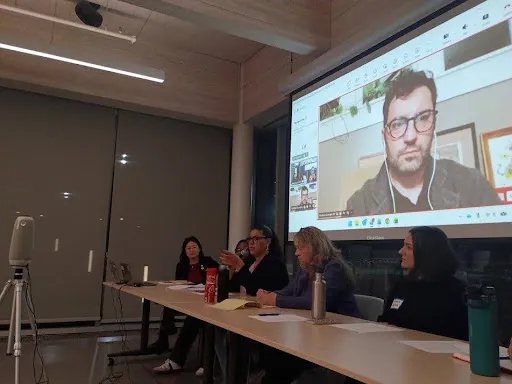
Panel warns surveillance and AI outpace Twin Cities laws
Minneapolis police used fake social media accounts to surveil Black residents and organizations, the Minnesota Department of Human Rights found in 2022. At a St. Paul community panel, Council Member…
AI summary
At a community panel on mass surveillance and AI held Oct. 19 at the North End Community Center in St. Paul, Minneapolis Council Member Robin Wonsley, state Rep. Athena Hollins, activist Anna Madison and attorneys from the ACLU of Minnesota and the Electronic Frontier Foundation warned that technology is outpacing local laws. Wonsley cited a 2022 Minnesota Department of Human Rights investigation finding Minneapolis police used fake social media accounts to surveil Black residents and groups; the city disputes the finding. She criticized the police department's use of AI firm Zencity; the mayor's press secretary called her comments disingenuous, saying the council approved the contract, multiple departments used it, and it expired without plans to renew. Panelists listed wins, including a Minneapolis facial recognition ban and state bans on AI nudification software and political deepfakes, and setbacks, such as failed algorithmic pricing bills. ACLU's John Boehler said local governments avoid public scrutiny, and Hollins said companies evade regulations, noted weakened bipartisan agreement on data privacy, and urged residents to pressure lawmakers.
- A 2022 state investigation found Minneapolis police used fake social media accounts to surveil Black residents, officials and groups like the NAACP from 2010 to 2020; the city has disputed the finding.
- Wonsley criticized the police use of Zencity to help comply with a settlement; the mayor's office called this disingenuous, saying the council-approved $500,000 contract was used by multiple departments and expired without renewal plans.
- Panelists cited wins such as a 2021 Minneapolis facial recognition ban, removal of St. Paul's Flock cameras, and state bans on AI nudification software (paused by a federal appeals court), political deepfakes and AI claim denials by insurers.
- Setbacks included failed bills on algorithmic pricing and wages and workplace AI displacement, and a failed override of a mayoral veto of a self-driving car ordinance.
- ACLU's John Boehler said governments avoid public scrutiny; Rep. Hollins said companies evade regulations, noted a shift among Republicans on data privacy, and urged residents to contact lawmakers.