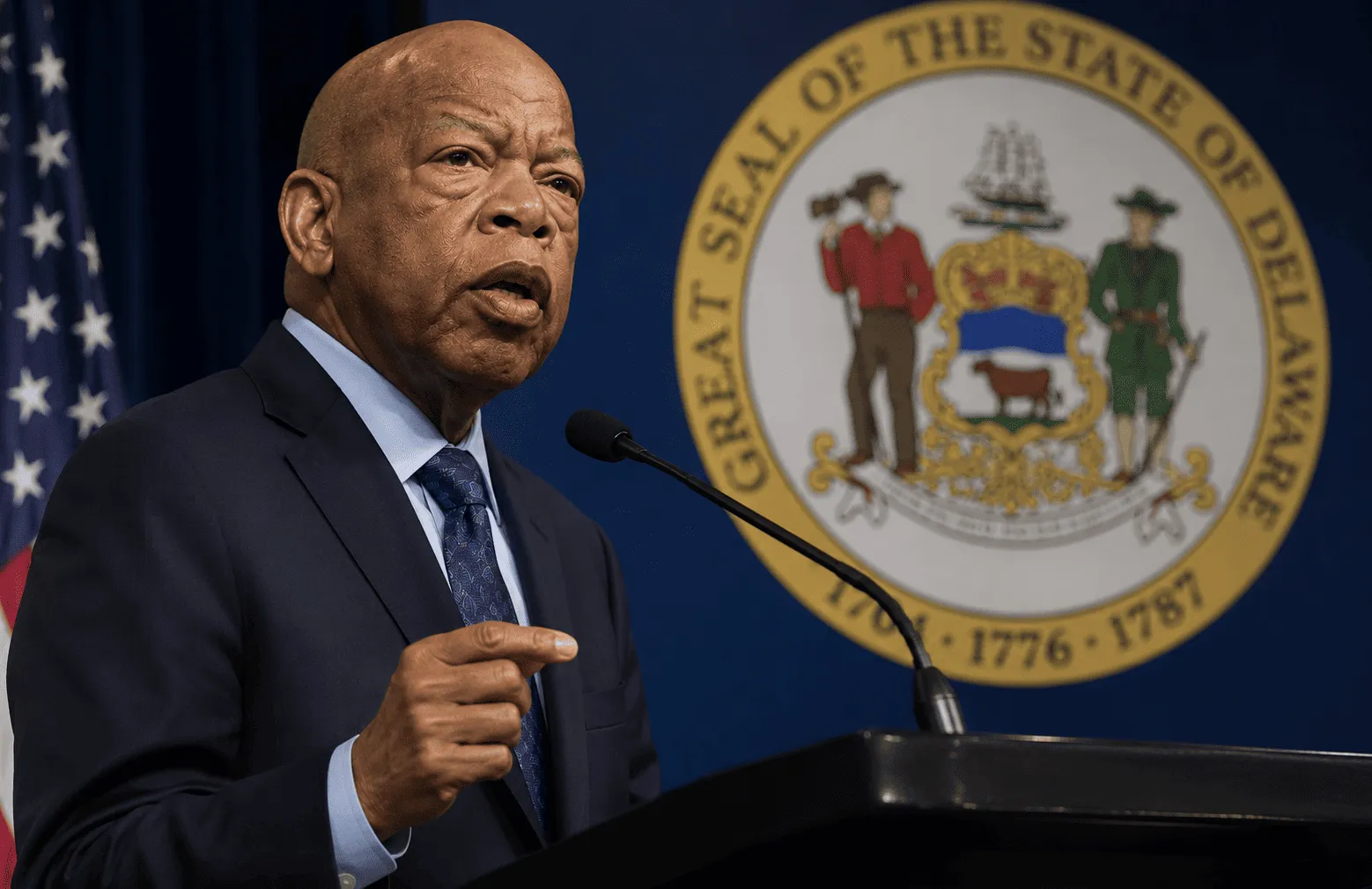
Delaware Makes History With John Lewis Voting Rights Act, Expanding Protections at the Ballot Box
Delaware has enacted the Delaware John Lewis Voting Rights Act, establishing new state-level protections designed to safeguard voters from discrimination, voter suppression, vote dilution,…
AI summary
Delaware has enacted the Delaware John Lewis Voting Rights Act (House Bill 444), which creates state-level protections against voter discrimination, suppression, vote dilution and intimidation. Introduced by State Rep. Larry Lambert, the bill is named for the late Congressman John Lewis. It passed the House 29-11 and the Senate 21-0. The law allows election policies or practices to be challenged when they result in prohibited voter suppression or dilution. It strengthens protections against intimidation, deception and obstruction, adds language-access protections, and gives the Attorney General authority to pursue certain violations. It does not expand who is eligible to vote. According to Lambert, its purpose is to provide civil protections and equal access to the political process for eligible voters. Lawmakers and advocates cited the U.S. Supreme Court's 2026 Louisiana v. Callais decision as a catalyst for the bill. The law takes effect July 1, 2027, giving the Department of Elections time to prepare. The article recounts Lewis's role in the Civil Rights Movement, including his beating at Selma on 'Bloody Sunday' in 1965.
- Delaware enacted the John Lewis Voting Rights Act (HB 444), introduced by Rep. Larry Lambert; it passed the House 29-11 and the Senate 21-0.
- The law lets policies causing prohibited voter suppression or dilution be challenged, strengthens protections against intimidation and deception, and adds language-access protections.
- The Delaware Attorney General gains authority to pursue certain voting-rights violations; the law does not expand voter eligibility.
- Supporters cited the U.S. Supreme Court's 2026 Louisiana v. Callais decision, which the article says weakened federal protections, as a catalyst.
- The law takes effect July 1, 2027, giving the Department of Elections time to prepare.