Commentary: American voting habits, they are a changin’
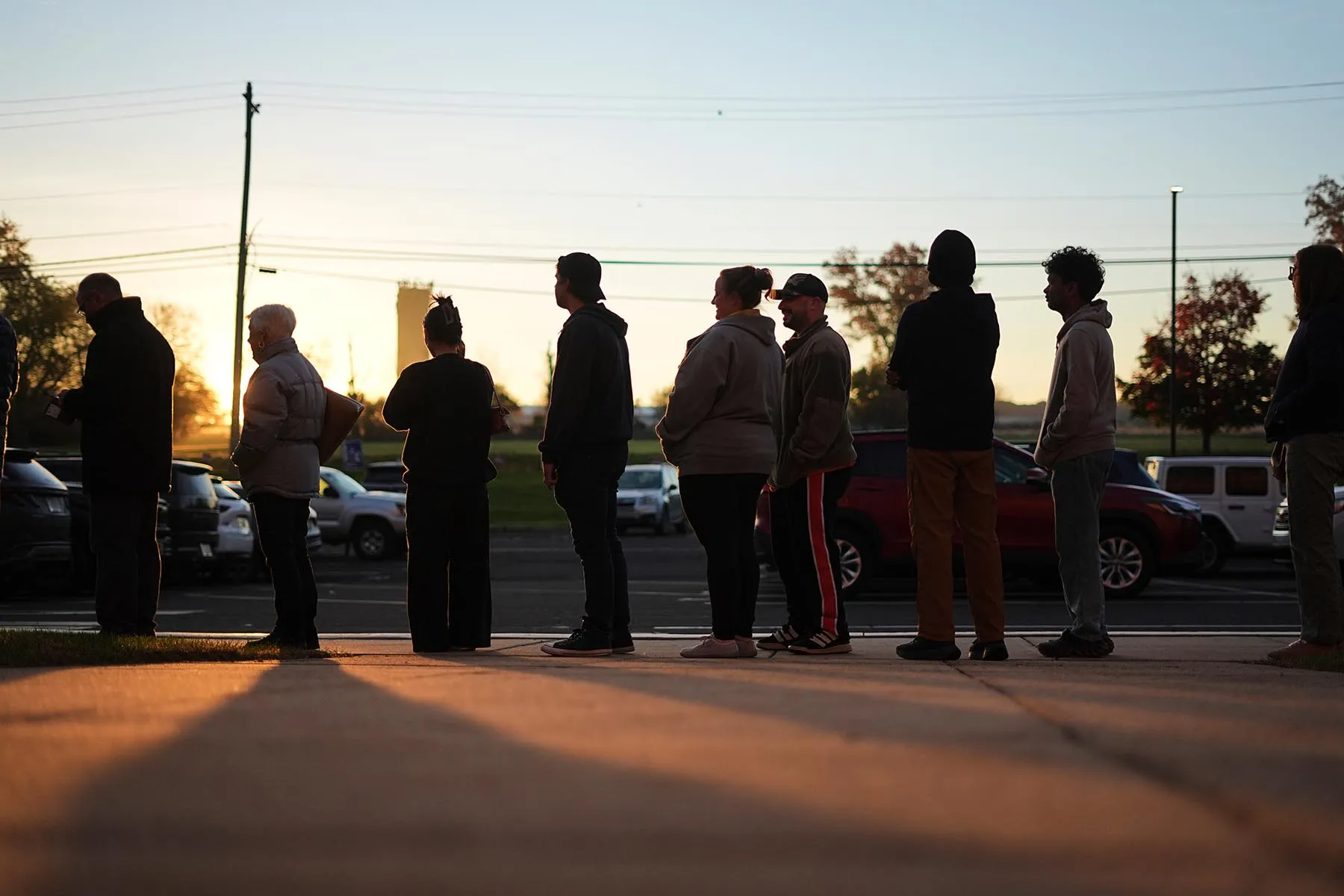
Voters wait in line at a polling place at Central Bucks South High School on Election Day in Warrington, Pa., Tuesday, Nov. 3, 2026. (AP Photo/Matt Rourke) A “blue tsunami” on Election Day — brought…
AI summary
In a commentary for The Philadelphia Sunday Sun, Amy V. Simmons argues that a 'blue tsunami' on Election Day reflected voters moving away from straight-party tickets and toward their own interests. She writes that Pennsylvania's first-time 18-year-old voters grew up amid political and institutional chaos and that new voters are leading a trend of registering as independents. In her view, hyper-partisanship appears to have broken and Americans want solutions to everyday problems. Pennsylvania is one of seven states with closed primaries. House Bill 280, introduced by State Rep. Jared Solomon, passed 115-88 in September and proposes a semi-open system letting unaffiliated voters take part in primaries while barring them from intraparty elections. Supporters say closed primaries disenfranchise unaffiliated taxpayers. Opponents say voters can switch registration and that open primaries could add confusion. Citing the Independent Voter Project, the author says nearly 1.3 million of about 8.6 million Pennsylvania voters (14.97%) are independent or unaffiliated, and argues their influence cannot be ignored.
- The author argues a 'blue tsunami' on Election Day was driven largely by voters stepping away from straight-party tickets.
- According to the author, new voters, including Pennsylvania's first-time 18-year-olds, are leading a trend of registering as independents.
- Pennsylvania is one of seven states with closed primaries. House Bill 280, a semi-open primary proposal, passed 115-88 in September; the article says the Senate has limited time to take it up before the session ends November 30.
- Supporters say closed primaries disenfranchise unaffiliated taxpayers. Opponents say voters can change registration and that open primaries may cause confusion and errors.
- Citing the Independent Voter Project, the article says nearly 1.3 million of about 8.6 million Pennsylvania voters (14.97%) are independent or unaffiliated, a number it describes as growing.