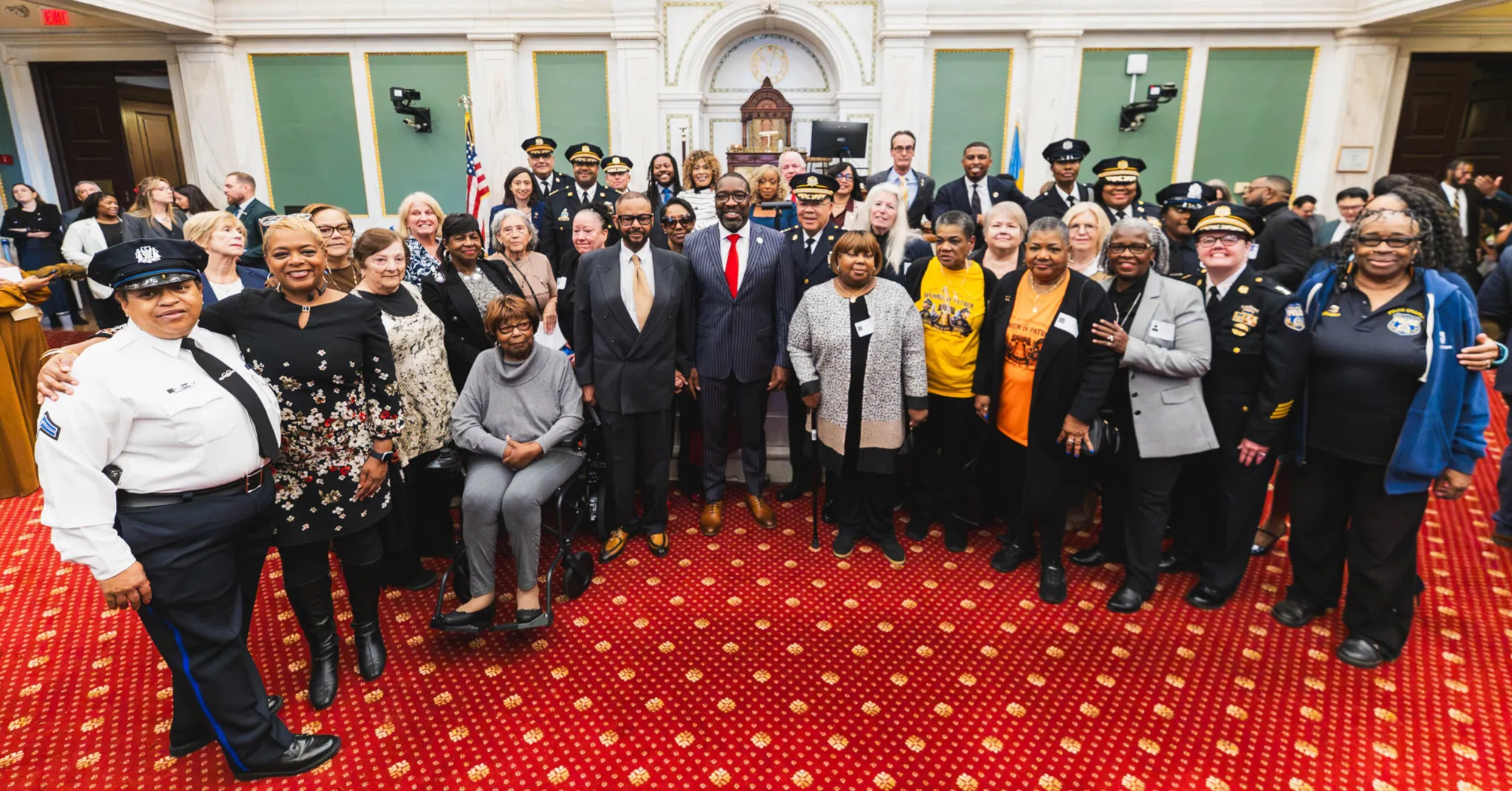
The Pioneers
Philadelphia City Council, along with the family and friends of former women law enforcement officers, honor the 50-year anniversary of their service.Philadelphia City Council Office of…
AI summary
Philadelphia City Council honored the first 100 women to serve as patrol officers in the Philadelphia Police Department with a proclamation at its Thursday stated meeting, marking 50 years of their service. Their path began in 1974 when Officer Penelope Brace, denied promotions after 10 years because women could not patrol, sued in federal court; in 1976 a judge ruled in her favor and 100 women were selected. Members of the group described hardships: Harriet Farr said they had to cut their hair, wear men's clothing and take pregnancy tests, while Maureen Rush recalled working without partners or GPS and called their story one of grit and determination. Maria Watson said male officers in the first three years of the pilot program tried to show the women could not do the work, but they proved otherwise. Many later leaders joined them at the podium, including Patricia Fox, the department's first woman Deputy Commissioner. Deputy Commissioner Myesha Massey said women now make up 22% of the department, which takes part in the 30×30 initiative to reach 30% women in policing by 2030, and thanked the pioneers for breaking barriers.
- Philadelphia City Council issued a proclamation honoring the first 100 women patrol officers of the Philadelphia Police Department on the 50th anniversary of their service.
- Officer Penelope Brace sued in federal court in 1974 after being passed over for promotions; a 1976 ruling in her favor opened patrol work to women.
- Pioneers described having to cut their hair, wear men's clothing, take pregnancy tests, and work without partners or GPS, while male officers tried to show they could not do the job.
- Women now make up 22% of the department, which participates in the 30×30 initiative aiming for 30% women in policing by 2030.
- Deputy Commissioner Myesha Massey thanked Council and said the women broke down barriers and paved the way for later female officers.