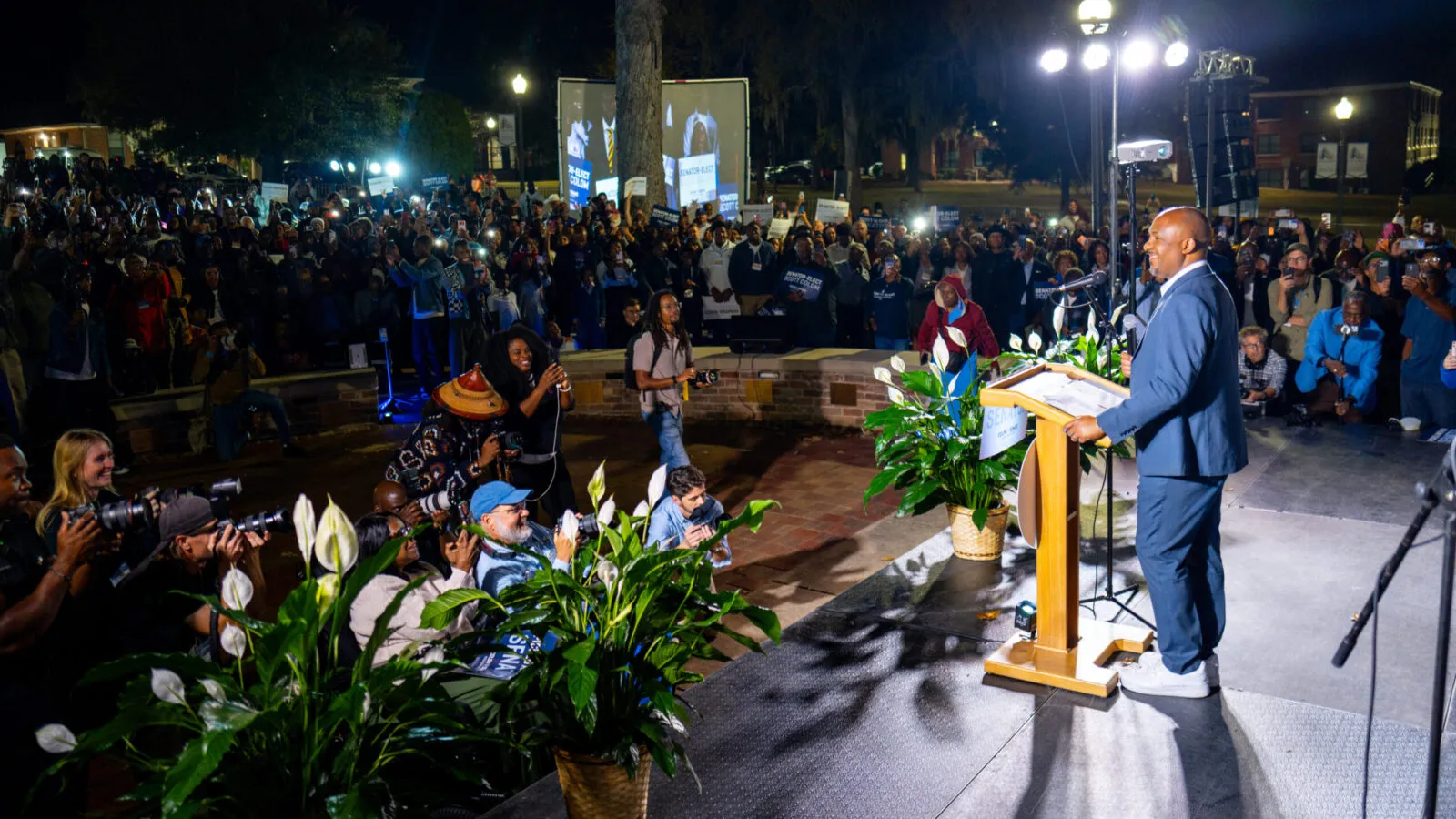
Mississippi, it’s about time
Finally witnessing the Mississippi race called for Scott Colom is so much bigger than a single candidate or a single state.
AI summary
In an op-ed for theGrio, law professor and former judge Njeri Mathis Rutledge writes that the race called for Senator-elect Scott Colom in Mississippi matters beyond one candidate or state. She recounts the state's history of disenfranchising Black voters, including Medgar Evers being turned away from voting by an armed white mob in 1946 and Fannie Lou Hamer being beaten in jail in 1963. She says that in Hinds County, about 70% Black, thousands of voters found they had been removed from the rolls after the Secretary of State used credit-reporting company Experian data instead of U.S. Postal Service data, and that an estimated 230,000 Mississippi voters were deactivated by the recent midterms. She calls this voter suppression rather than election security, cites a 2016 court ruling against a North Carolina voting law, and describes voter fraud as rare. She mentions a Texas mid-decade redistricting effort she says failed. She argues that voter suppression is an American problem, not just a Black problem, and calls Colom's victory a reflection of voters who persisted despite these obstacles.
- The author argues that Scott Colom's Mississippi Senate victory is significant beyond a single candidate or state.
- The op-ed cites Mississippi's history of voter disenfranchisement, including the experiences of Medgar Evers and Fannie Lou Hamer.
- According to the author, Mississippi's Secretary of State used Experian credit data to deactivate voters, with an estimated 230,000 deactivated by the recent midterms.
- The author describes voter fraud as rare and voter suppression as widely documented, citing a 2016 Fourth Circuit ruling on a North Carolina law.
- She calls for the same effort used against voter fraud to be applied to gerrymandering, voter roll purging and other forms of suppression.