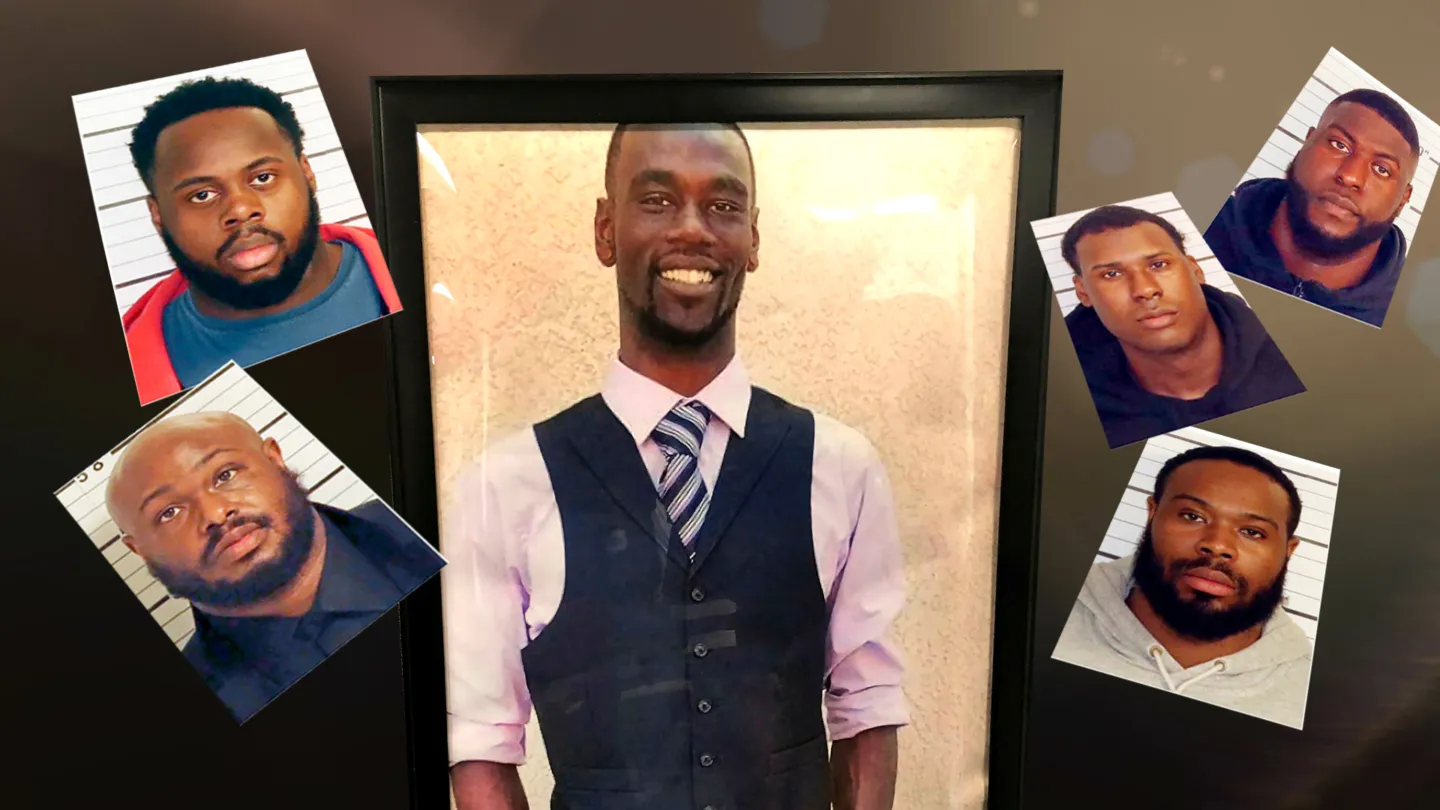
“Not guilty” verdicts for three officers in Tyre Nichols’ case are a gut punch to Black America
Tyre Nichols brutal death and the acquittal of the officers involved exposes a justice system that continues to fail Black Americans.
AI summary
In this op-ed for theGrio, author Jonathan Conyers argues that the state-trial acquittal of three Memphis police officers, Tadarrius Bean, Demetrius Haley and Justin Smith, on all charges related to Tyre Nichols' death, including second-degree murder, shows a justice system that continues to fail Black Americans. He writes that Nichols, unarmed and crying for his mother, was beaten by five officers after a traffic stop, all caught on video. He places the case alongside those of Trayvon, Mike, Eric, Freddie and George. Responding to those who say the outcome is not about race because the officers were Black, he argues that Black officers can still serve a system built to protect itself, citing the 2015 Freddie Gray case. He notes that all five officers, including Emmitt Martin III and Desmond Mills Jr., pled guilty to or were convicted of various charges in federal court and could face jail time, but says the acquittal sends the message that police will be protected. He calls the verdict morally wrong and urges a transformation of policing, prosecution and how Black life is valued.
- Officers Tadarrius Bean, Demetrius Haley and Justin Smith were acquitted in a state trial of all charges related to Tyre Nichols' death, including second-degree murder.
- The author argues that the officers being Black does not mean the system is not racist, saying police culture protects itself and can use Black officers to deflect criticism.
- He links the case to those of Trayvon, Mike, Eric, Freddie and George, and cites the 2015 Freddie Gray case, in which Black officers were also not convicted.
- All five officers pled guilty to or were convicted of various charges in federal court and could face some jail time, but the author says the acquittal signals that police will be protected.
- The author calls the verdict morally wrong and calls for a transformation of policing, prosecution and how Black life is valued.