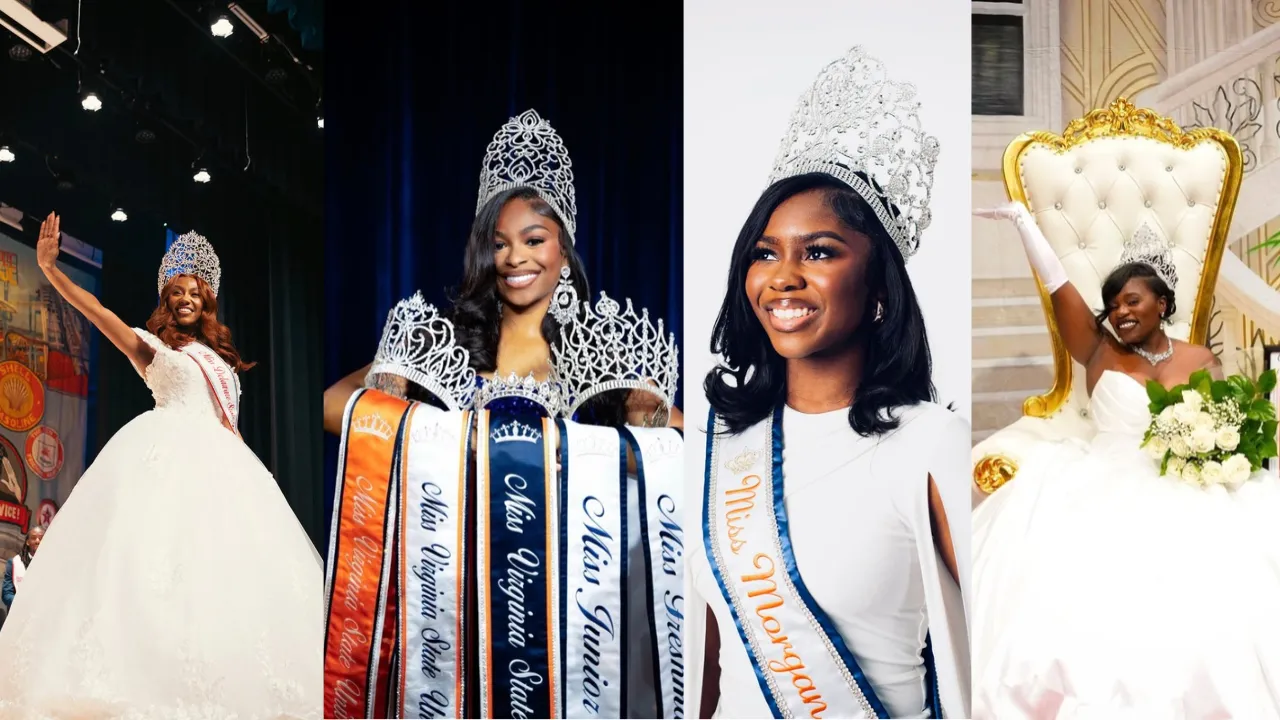
What does it really mean to wear the crown? Four HBCU Queens explain
Four past and present HBCU queens reflect on the history, responsibility and cultural legacy behind their titles and royal courts.
AI summary
TheGrio spoke with four current and former HBCU queens about what their titles mean beyond crowns, sashes and coronation day. The article explains that HBCU royal courts date back to the 1920s, when Black colleges began crowning a "Miss" during homecoming. Today, students campaign for court positions much like student government, with platforms and elections, and typically serve as ambassadors and student advocates. Aliyah Mayers (Miss Virginia State University) says the role taught her the power of visibility and of having a seat at the table. Ssanyu Lukoma (Miss Howard University) ties the tradition to the history of segregation and slavery and describes managing Howard's 18-member court. Destiny Fowobaje (Miss Morgan State University), the first Nigerian Miss Morgan, says she ran to challenge assumptions about who could hold the title. Nia Dooley (Miss Delaware State University) says she was inspired by previous queens and stresses that the positions involve real work. All four describe royal courts as rooted in legacy, representation and leadership rather than a popularity contest.
- HBCU royal courts date to the 1920s; court members today campaign and are elected, and typically serve as ambassadors for their schools and advocates for the student body.
- Aliyah Mayers, a first-generation student, says sitting in on board meetings and conferences showed her the responsibility to use her access to advocate for others.
- Ssanyu Lukoma says she received the most votes of any candidate in Howard's history with a campaign centered on community, and that royalty should be accessible and serve as a bridge between students and the administration.
- Destiny Fowobaje, the first Nigerian Miss Morgan and the first in her family to attend college, says she wanted to show that background need not limit who can hold the title.
- Nia Dooley says her personality fit a queen role better than student government, and that the lineage of queens is central to HBCU culture and the celebration of Black excellence.