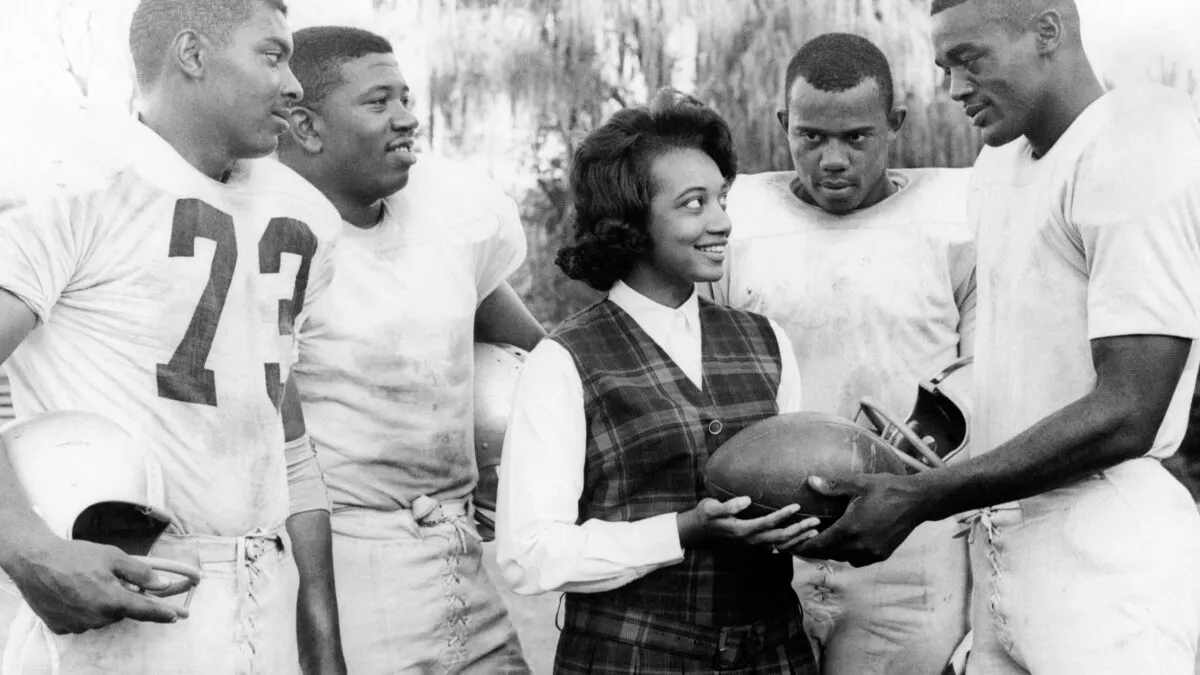
HBCUs are sitting on Black history we haven’t even discovered yet — and Getty is helping to uncover it
AI bias rating
Rated Center-left on a five-point scale from left to right.
- Left
- Center-left
- Center
- Center-right
- Right
Why this rating
- The story is a largely positive, human-interest profile of Getty's HBCU digitization project. It relies almost entirely on Getty executive Cassandra Illidge as its source, so it reads close to a promotional feature for the partnership.
- Discoveries are framed in emotional, wonder-driven terms ('shocked', 'couldn’t believe it', 'nothing short of rare', 'gushed'), which emphasizes the significance of the archives.
- The project's origins are tied to 'the social unrest of 2020', placing corporate support for HBCUs in the context of racial-justice responses.
- Political context appears in one sentence: the Trump administration 'has been attacking' DEI initiatives and HBCU support programs. The verb 'attacking' is the article's own characterization rather than an attributed claim, and it signals a center-left perspective. This phrase is not listed under loaded language because its exact position in the text was not pinned down.
- AI is framed mainly as a threat to the authenticity of images of Black life, illustrated by the Tuskegee AI-generated photo controversy.
- The revenue split (50% to schools, 30% to scholarships, 20% reinvested) and the schools' retained ownership are presented as evidence that the arrangement is equitable, without independent assessment.
- No HBCU archivists, administrators or students are quoted directly about how they view the partnership or its terms.
- No independent archivists or historians assess the significance of the finds or the value of the commercial licensing model.
- There are no critical or skeptical views on a commercial company licensing images from HBCU archives and taking part of the royalties.
- The Trump administration's position on DEI and HBCU funding is not presented.
- There are no figures on how much royalty revenue or scholarship money the program has actually generated.
Cassandra Illidge shares how Getty’s HBCU archival project has been going five years in and what’s next for the collaboration.
AI summary
Five years into Getty Images' HBCU archival project, Cassandra Illidge, Getty's vice president of partnerships, describes what it has uncovered. Launched in 2021 after the social unrest of 2020, the first-of-its-kind grant program gives HBCUs resources and technology to digitize their archives while the schools keep ownership of their images. Photos are licensed through Getty: 50% of royalties go to the school, 30% to scholarships and 20% back into the grant. The project has grown from four schools to 11. Finds include Muhammad Ali in a 1980 Florida A&M football crowd photo, a young Langston Hughes at Lincoln University in the 1920s, images from Claflin's founding era in the 1860s, Albert Einstein's 1946 Lincoln visit, and Durham's Black Wall Street. Getty is also working with Ancestry to preserve physical records. Illidge says the work is urgent amid AI threats to image authenticity and the Trump administration's attacks on DEI and HBCU support. She opposes AI enhancement of editorial and historical material. She also urges schools to put contemporary campus photography online so they can tell their own stories.
- Getty's HBCU digitization project began in 2021 and has expanded from four to 11 schools; the schools retain ownership of their images.
- Licensing royalties are split three ways: 50% to the school, 30% to scholarships and 20% reinvested in the grant for future digitization.
- Discoveries include Muhammad Ali at a 1980 football game, Langston Hughes as a 1920s student, 1860s Claflin images, Einstein's 1946 Lincoln visit and Durham's Black Wall Street.
- Getty is also working with partners such as Ancestry to preserve vital documents and make them accessible for research, including genealogy research.
- Illidge cites urgency from AI manipulation and the Trump administration's attacks on DEI and HBCU support, saying AI should never enhance editorial or historical images.