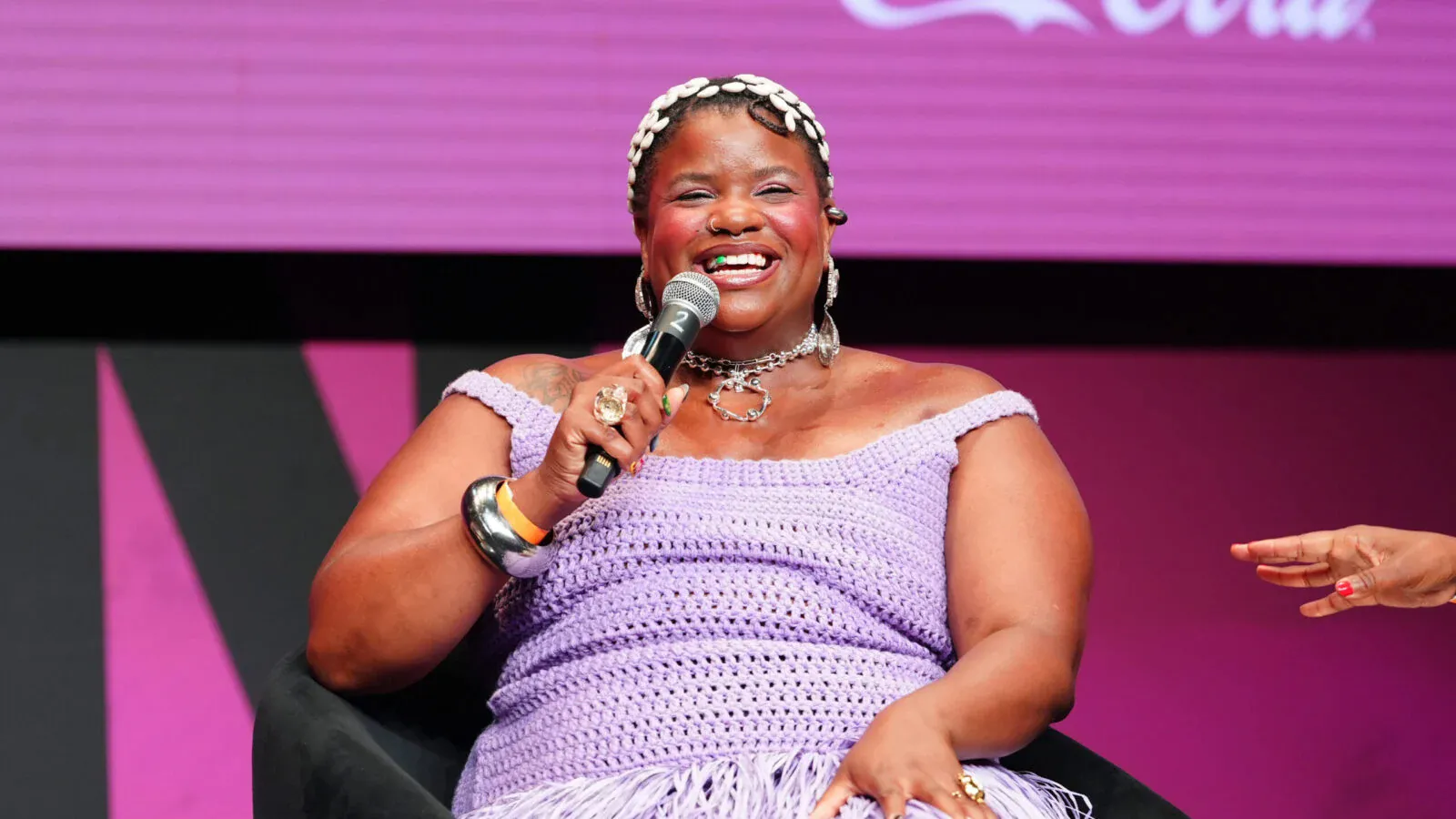
Ericka Hart reveals stage 4 colon cancer diagnosis more than a decade after breast cancer battle
AI bias rating
Rated Center on a five-point scale from left to right.
- Left
- Center-left
- Center
- Center-right
- Right
Why this rating
- The story is a personal human-interest piece built mainly on Hart's own Instagram video and quotes, which presents her experience in her own words.
- The introduction stresses her identity (queer, activist, sexual educator), which places her within a particular community and audience.
- The article moves from her personal story to public-health information, presenting American Cancer Society statistics on higher colorectal cancer rates and deaths among African Americans.
- It ends with service information (symptoms, screening age), framing the story partly as an awareness and education piece.
- Her request for financial support is reported without comment, which implicitly points to the economic strain of serious illness for self-employed workers.
- There is no comment from medical experts on her prognosis, treatment options, or the link between earlier breast cancer and later colon cancer.
- The article does not explain the reasons behind the racial disparities in colorectal cancer it cites.
- It gives no information on the access or cost barriers to screening and care that bear on the financial needs she describes.
Ericka Hart reveals her stage 4 colon cancer diagnosis, 12 years after her breast cancer diagnosis. Learn more about symptoms and screening.
AI summary
Ericka Hart, a New York City-based queer cancer survivor, activist and sexual educator who was diagnosed with bilateral breast cancer in May 2014 at age 28, announced in an Instagram video on Tuesday that she has been diagnosed with stage 4 colon cancer. She said she was shocked, having attributed bloating, stomachaches and fatigue on tour to perimenopausal changes, until a repeat colonoscopy showed the cancer had spread. She asked for prayer and support, said she will fight for her child and family, and shared Venmo and PayPal details so she can rest without worrying about work. She asked supporters not to share stories of loved ones who died of the disease, preferring distractions like TV recommendations and gossip. The article cites the American Cancer Society: African Americans have the highest colorectal cancer rate of any racial/ethnic group in the U.S., are 20% more likely to be diagnosed and 40% more likely to die from it. Symptoms include changes in bowel habits, rectal bleeding, abdominal pain, fatigue and unexplained weight loss. Screening is recommended from age 45 for most people, though symptoms should be recognized at any age.
- Ericka Hart, diagnosed with bilateral breast cancer in 2014 at 28, revealed a stage 4 colon cancer diagnosis on Instagram.
- She initially attributed bloating, stomachaches and fatigue to perimenopause; a repeat colonoscopy showed cancer that had spread.
- She asked for prayer and support, shared Venmo and PayPal details, and requested no stories of people who died from the disease.
- According to the American Cancer Society, African Americans are 20% more likely to be diagnosed with colorectal cancer and 40% more likely to die from it.
- Symptoms include bowel habit changes, rectal bleeding, abdominal pain, fatigue and weight loss; screening is recommended for most people starting at 45.