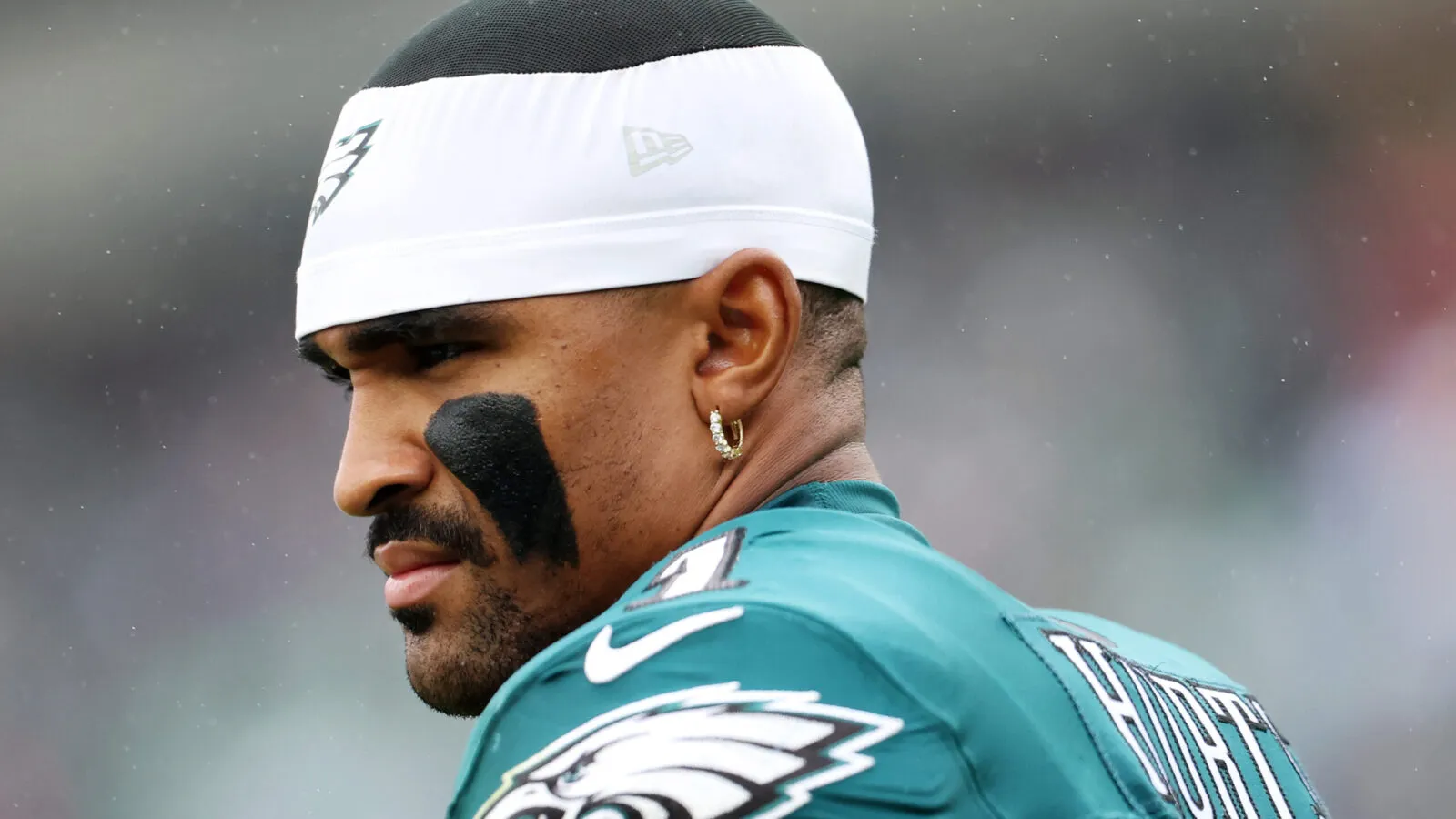
Jalen Hurts’ blood clot scare raises an important question. Who’s really at risk?
AI bias rating
Rated Center on a five-point scale from left to right.
- Left
- Center-left
- Center
- Center-right
- Right
Why this rating
- The article uses a celebrity athlete's medical emergency as a hook for a public-health explainer aimed at Black Americans.
- It links Hurts' individual case to group-level racial disparities in blood clot risk, though it does not say whether race played any role in his case. His injury (being cleated in the calf) is described separately.
- It attributes the disparities mainly to 'longstanding systemic disparities' alongside genetic and health factors, which places a structural explanation up front.
- The tone is advisory and empowering, encouraging self-advocacy, regular checkups, and knowing family history.
- Claims rely on institutional sources such as the CDC, the Mayo Clinic, and the American Journal of Medicine, and on statements from the Eagles.
- No direct comment from Hurts, his doctors, or independent medical experts on his specific case.
- No discussion of whether his trauma-related clot is representative of the population-level risk patterns described.
- No researcher input on how much each factor (genetic, socioeconomic, access to care) contributes to the disparity.
- The decision to clear him to play after the first clot is not examined, and no team medical staff perspective is included.
After NFL star Jalen Hurts developed blood clots in his leg and lungs, we break down what Black Americans should know about their risk.
AI summary
Philadelphia Eagles quarterback Jalen Hurts, 28, has been diagnosed with blood clots in both lungs and will miss the rest of the NFL season, the Eagles and his agent Nicole Lynn announced on Oct. 19. After being cleated in his left calf in an Oct. 4 game against the Rams, a superficial clot was found and he was cleared to play on Oct. 11, but follow-up testing revealed deep vein thrombosis and bilateral pulmonary embolism. The Eagles say he is stable and expected to fully recover; he will stay on blood thinners and away from contact football. The article notes that about 900,000 Americans develop blood clots each year, that Black Americans are roughly 65% more likely to develop them than white Americans, and that Black people under 40 face increased risk. It attributes this to systemic disparities, underlying conditions and genetics, lists other risk factors, and outlines prevention steps and warning signs, noting that about half of people with DVT have no symptoms.
- Jalen Hurts, 28, was diagnosed with blood clots in both lungs after a calf injury on Oct. 4 and is out for the rest of the NFL season, though the Eagles expect a full recovery.
- He experienced deep vein thrombosis and bilateral pulmonary embolism, which can block blood flow and become life-threatening without prompt treatment.
- Black Americans are roughly 65% more likely to develop blood clots than white Americans, and Black people under 40 face increased risk, according to cited research.
- Recommended prevention includes staying active, walking every one to two hours during long periods of sitting, managing underlying conditions and knowing family medical history.
- Warning signs include leg swelling, pain or discoloration, and, if a clot reaches the lungs, sudden shortness of breath or chest pain; about half of people with DVT have no symptoms, per the CDC.