HBCUs Have Proven Their Economic Value. Are We Investing Enough In Their Future?
AI bias rating
Rated Center-left on a five-point scale from left to right.
- Left
- Center-left
- Center
- Center-right
- Right
Why this rating
- The piece is an advocacy op-ed by three authors who run HBCU Honors, an organization that partners with HBCUs, and it argues for greater investment in HBCUs.
- It frames HBCUs mainly through economic value (impact studies, job counts, homecoming revenue) to argue that they deserve more reinvestment.
- It presents historical and state-funding disparities with predominantly white institutions as a central injustice, citing a federal analysis of land-grant funding.
- It calls chiefly for multiyear corporate partnerships and treating HBCUs as business partners, rather than for specific government policy, which tempers the lean toward the center.
- It uses rhetorical questions ('Are we investing enough?', 'If not us, then who?') to frame investment as a shared moral and economic responsibility.
- It extends the argument to emerging technology and the changing economics of college athletics, framing both as new risks of widening inequity.
- No response from state governments or legislators about the cited land-grant funding gaps or how per-student funding comparisons are calculated.
- No views from corporations or philanthropies on why their current levels or forms of investment look the way they do.
- No direct voices from HBCU administrators, faculty or students on their own priorities.
- No discussion of critiques or limitations of economic impact estimates such as the UNCF study or the $50 million homecoming figure.
- The authors' organizational interest in expanded corporate partnerships with HBCUs is disclosed but not weighed against other approaches.
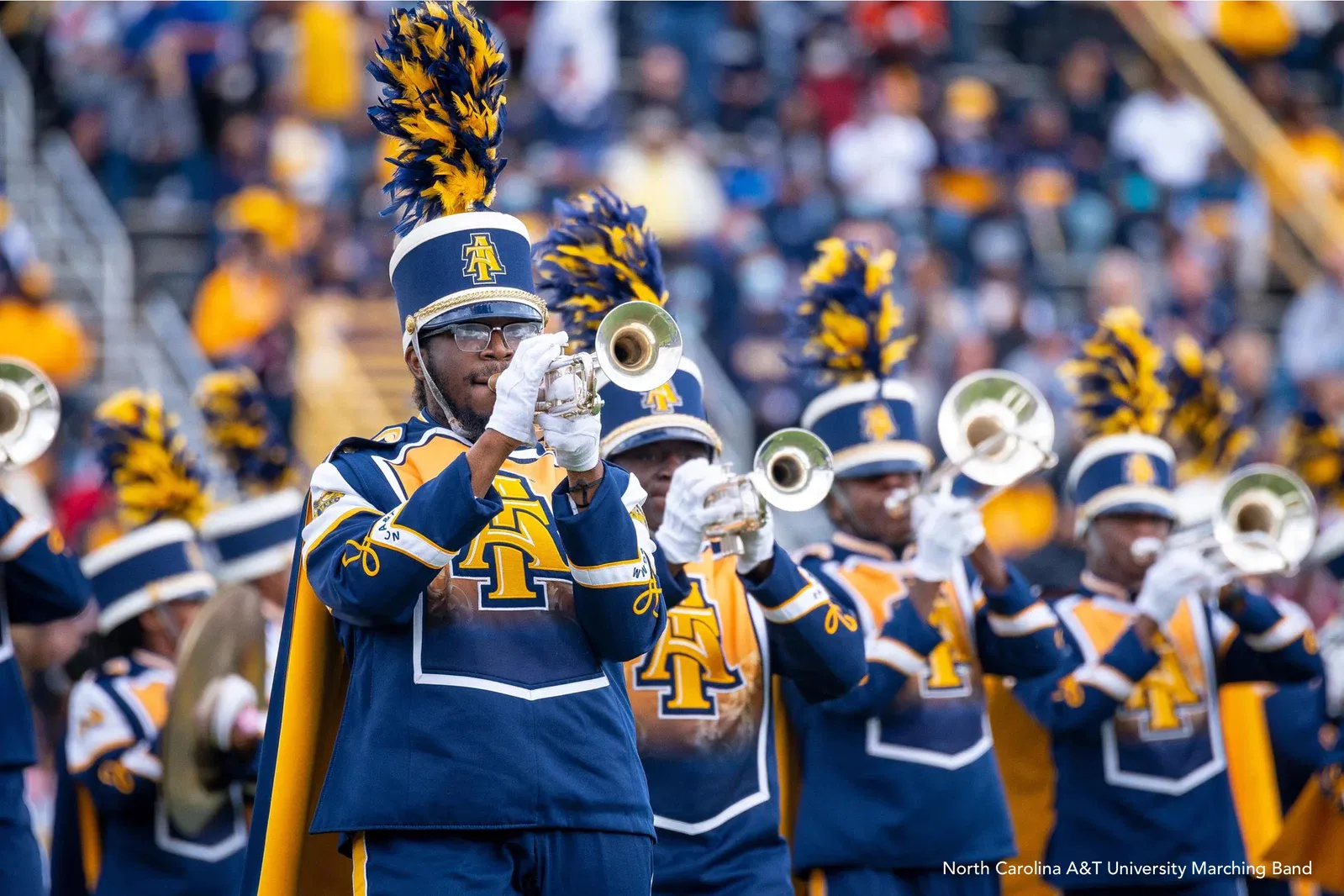
By Michele Ghee, Michelle Bailey, and Dorinda Walker North Carolina A&T State University celebrated the 100th edition of its legendary Greatest Homecoming on Earth (GHOE), as thousands of alumni…
AI summary
In an opinion piece, Michele Ghee, Michelle Bailey and Dorinda Walker argue that HBCUs have proven their economic value but asks whether enough is reinvested in them. North Carolina A&T's 100th Greatest Homecoming on Earth is estimated by the university to generate over $50 million in economic activity. A 2024 UNCF study puts HBCUs' annual economic impact at $16.5 billion and over 136,000 jobs. A 2023 federal analysis found historically Black land-grant universities were underfunded by about $12.6 billion from 1987 to 2020, including over $2 billion for NC A&T. The authors acknowledge existing support from corporations, foundations and groups like UNCF and the Thurgood Marshall College Fund, but raise concerns about a technological divide and the changing economics of college athletics. They call for multiyear partnerships with measurable goals, investment in infrastructure, research, endowments and careers, and for treating HBCUs as business partners rather than charity recipients. They describe their HBCU Honors work and its 2026 theme, "If Not Us, Then Who?"
- NC A&T estimates its 100th homecoming generates more than $50 million in economic activity; UNCF's 2024 study says HBCUs generate $16.5 billion annually and support over 136,000 jobs.
- A 2023 analysis by the U.S. Departments of Education and Agriculture found historically Black land-grant universities underfunded by about $12.6 billion (1987–2020), NC A&T by over $2 billion compared with NC State.
- The authors question whether HBCU students have adequate access to technology, research and industry partnerships, and note athletic financial disparities amid NIL and revenue-sharing changes.
- They urge multiyear partnerships with measurable goals, judging corporate commitment by long-term outcomes, and recognizing HBCUs as valuable business partners.
- The authors, who produce HBCU Honors for BET and BET Her, say no single organization can address HBCUs' challenges alone and call on corporations, alumni and institutions to invest more.