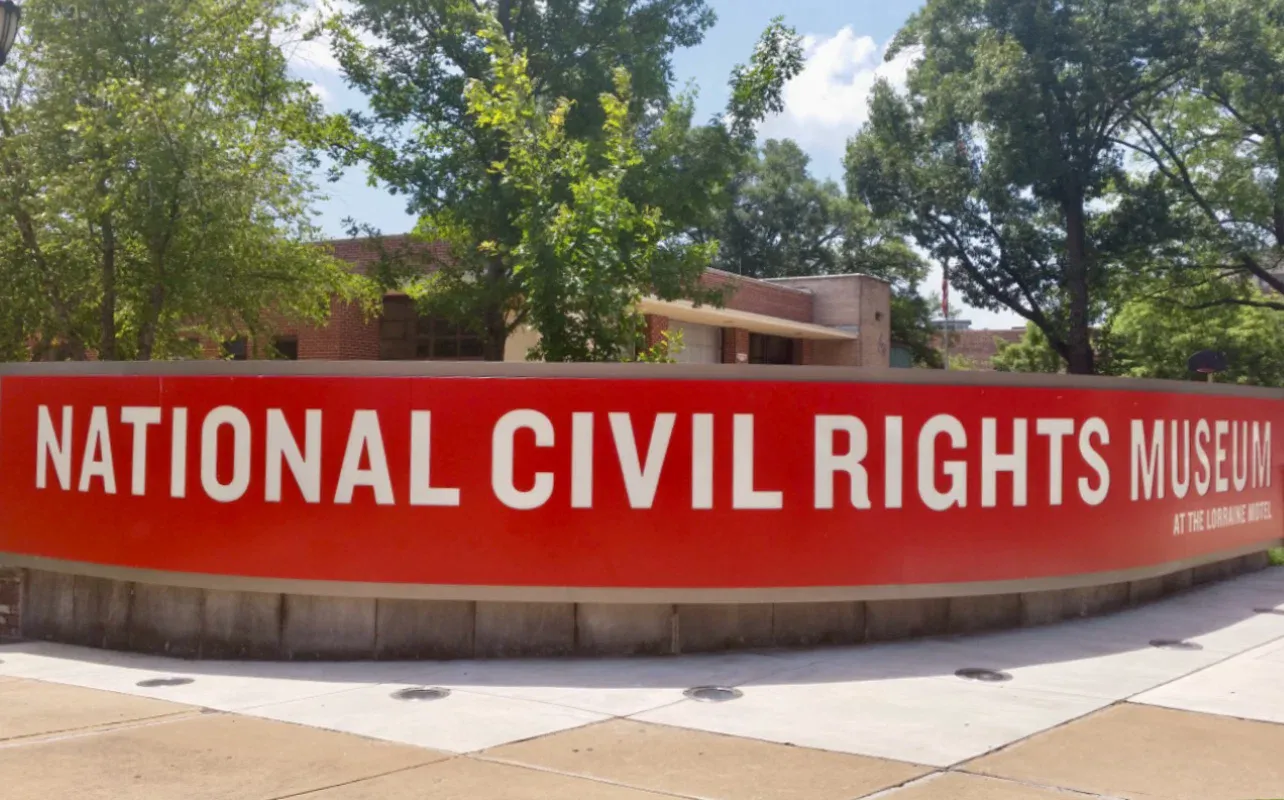
From The Desk Of The National Civil Rights Museum On Its 35th Anniversary
AI bias rating
Rated Center-left on a five-point scale from left to right.
- Left
- Center-left
- Center
- Center-right
- Right
Why this rating
- The piece is written by the museum itself as an anniversary statement, so it is promotional and celebratory rather than journalistic.
- It frames the museum's origins as a grassroots community effort and names its founders and funders to emphasize local ownership.
- Milestones such as renovations, acquisitions and affiliations are presented as evidence of growth and success, with no critical evaluation.
- Civil rights history is framed as an ongoing, unfinished struggle, and readers are directly invited to act through phrases like 'What will you do next?'
- It highlights Bayard Rustin as a figure who deserves a more prominent place in civil rights history.
- It closes with a call to action and an event promotion for the Freedom Award ceremony.
- There is no independent or outside voice, such as historians, critics or visitors, assessing the museum's work.
- It does not mention past controversies about the museum, such as debates over the Lorraine Motel's conversion or the displacement of its last resident.
- It gives no detail on funding sources or on how the renovation costs were financed.
- It does not specify the 'questions of accountability and justice' about the assassination that it says remain.
Written by the National Civil Rights Museum Thirty-five years ago today, on Sept. 28, 1991, the National Civil Rights Museum opened its doors at the Lorraine Motel, where Dr. Martin...
AI summary
In a statement marking its 35th anniversary, the National Civil Rights Museum recalls opening on Sept. 28, 1991, at the Lorraine Motel in Memphis, where Dr. Martin Luther King Jr. was assassinated on April 4, 1968. After the motel became a spontaneous memorial and faced foreclosure, Judge D'Army Bailey, State Rep. A.W. Willis Jr. and Charles "Chuck" Scruggs formed the Martin Luther King Memorial Foundation in 1982 to save it. Community fundraising, AFSCME, Lucky Heart Cosmetics, Tri-State Bank and city, county and state governments supported the effort. The museum traces the freedom struggle from slavery through the March on Washington. Milestones include the Boarding House (opened 2002), a $27.5 million renovation in 2014, Smithsonian Affiliate status in 2016 and the Corporate Equity Center in 2022. This year, it reopened its Legacy Building in May after a $38 million renovation, acquired more than 500 Bayard Rustin artifacts and launched the Bayard Rustin Institute. The Freedom Award ceremony is set for Thursday, Oct. 1, at the Orpheum Theatre. The museum thanks its founders and supporters and recommits to preserving the site and equipping the next generation.
- The National Civil Rights Museum opened Sept. 28, 1991, at the Lorraine Motel, where Dr. Martin Luther King Jr. was assassinated in 1968.
- Founders formed the Martin Luther King Memorial Foundation in 1982 to save the declining motel, backed by community fundraising, donors, a bank loan and local and state governments.
- Past milestones include the Boarding House (opened 2002), a $27.5 million renovation in 2014, Smithsonian Affiliate status in 2016 and the Corporate Equity Center in 2022.
- In the anniversary year, the museum reopened its Legacy Building after a $38 million renovation, acquired over 500 Bayard Rustin artifacts and launched the Bayard Rustin Institute.
- The annual Freedom Award ceremony takes place Thursday, Oct. 1, at the Orpheum Theatre, and the museum invites visitors to decide "What will you do next?"