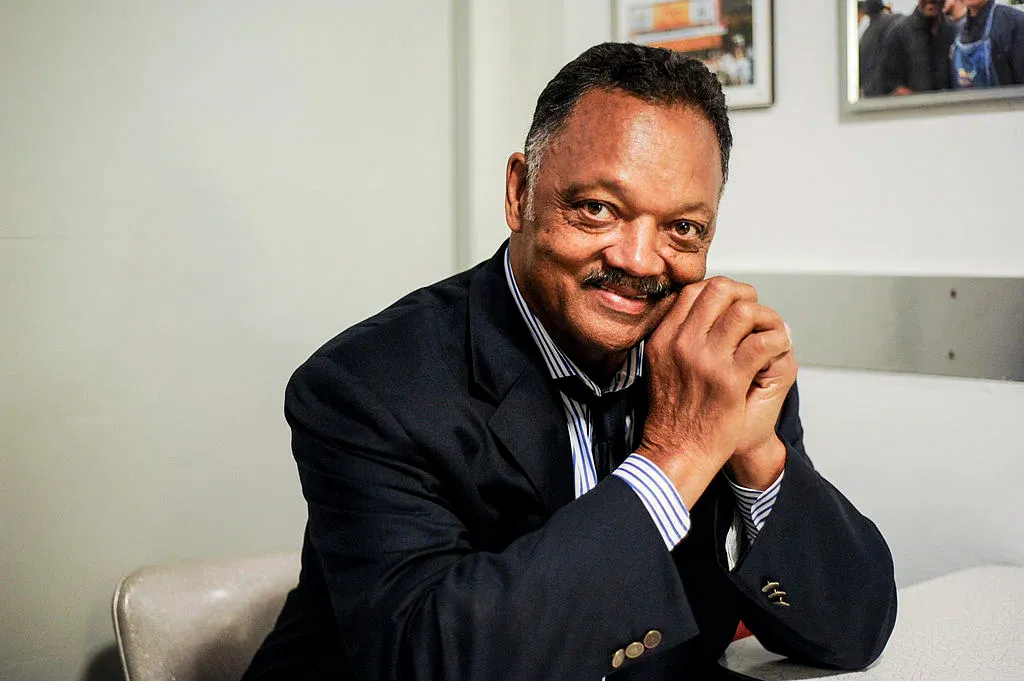
Jesse Jackson: A Well-Deserved Salute To Our Champion For Equal Opportunity
AI bias rating
Rated Center-left on a five-point scale from left to right.
- Left
- Center-left
- Center
- Center-right
- Right
Why this rating
- The piece is a first-person tribute by a Black Enterprise editor, openly admiring and written from an insider's perspective rather than as neutral reporting.
- Jackson is framed almost exclusively through achievements, honors and testimonials, using epithets such as "Conscience of the Nation" and "Great Unifier."
- The publication has a stake in the subject: it gave him its award, the author worked with his team on the Wall Street Project, and the article ends by promoting registration for the publication's own summit.
- Economic empowerment and diversity of capital markets are presented as the continuation of the civil rights struggle, mainly through Jackson's own "four stages" quote.
- The Wall Street Project's impact is shown through a list of high-profile IPOs involving Black-owned firms, without data on the scale of their participation.
- No critical or skeptical voices on Jackson's career, tactics or controversies.
- No independent assessment of the Wall Street Project's measurable outcomes beyond the author's and supporters' claims.
- No views from corporations targeted by his boycotts or shareholder activism.
- No perspectives from political opponents or from Democratic Party figures on his campaigns and rule changes.
- All quoted sources are allies or affiliates, such as Earl Graves and John Rogers.
For 40 years, Jesse Jackson has been a champion for equal opportunity
AI summary
In a tribute piece, Black Enterprise's Derek T. Dingle describes civil rights leader Rev. Jesse Jackson's influence on his life and Jackson's five decades of work for equal opportunity. Born in Greenville, South Carolina in 1941, Jackson worked for Martin Luther King Jr. at the SCLC and founded Operation PUSH in 1971 and the National Rainbow Coalition in 1984; the two merged in 1996 as the Rainbow PUSH Coalition. His 1984 and 1988 presidential runs registered more than 3 million voters, and in 1988 he finished second in the Democratic primaries with over 1,200 delegates. He served as D.C.'s 'shadow senator' and as a special envoy for democracy in Africa. He received the Presidential Medal of Freedom in 2000 and South Africa's National Order in 2013. Through his Wall Street Project, Black-owned financial firms took part in major IPOs such as Google, Facebook and Visa. He received the Earl G. Graves Sr. Vanguard Award at the 2019 Black Men XCEL Summit. In 2018, Jackson described a fourth stage of the African American struggle: access to capital and wealth building.
- Derek T. Dingle recounts Jesse Jackson's influence on him, from a high school speech to covering his 1988 presidential run, in which Jackson finished second in the Democratic primaries with over 1,200 delegates.
- Jackson founded Operation PUSH (1971) and the National Rainbow Coalition (1984), which merged in 1996 to form the Rainbow PUSH Coalition.
- He received the Presidential Medal of Freedom in 2000, South Africa's National Order in 2013, and the Earl G. Graves Sr. Vanguard Award at the 2019 Black Men XCEL Summit.
- Through the Wall Street Project, Black-owned firms took part in major IPOs, including Goldman Sachs, Google, Visa, Facebook and Snap Inc.
- At the 2018 Economic Summit, Jackson said African Americans are in the early days of a fourth stage of struggle: access to capital, industry, technology and deal flow.