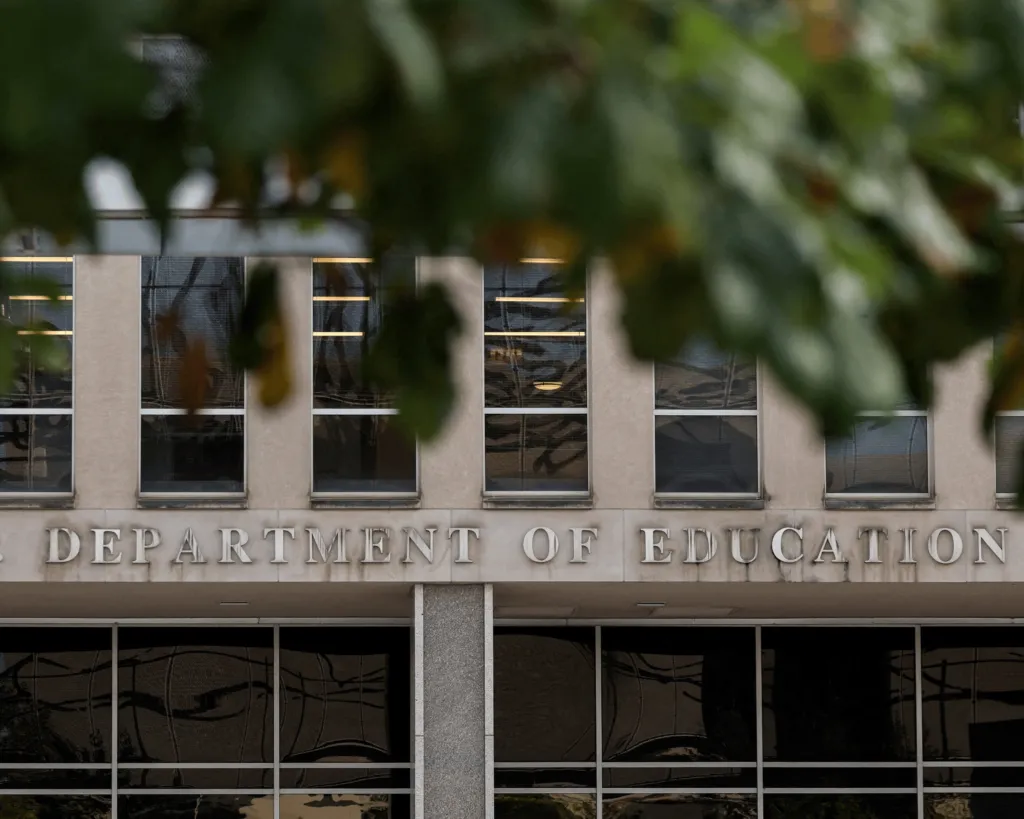
Federal Judge Temporarily Halts Trump Initiative To Obtain Race Data From Colleges
AI bias rating
Rated Center-left on a five-point scale from left to right.
- Left
- Center-left
- Center
- Center-right
- Right
Why this rating
- The article sets the data-collection ruling beside an earlier ruling against Trump DEI directives. This presents both as part of a pattern of courts checking the administration, although the two cases involve different policies.
- The administration's stated rationale (monitoring compliance with the 2023 Supreme Court ruling, concern about diversity statements as racial proxies) is reported. However, it comes only from the August memo, with no direct quotes from officials.
- The judge's reasoning for issuing the temporary restraining order is not explained, so the reader does not learn the legal basis for the block.
- Background on the long-standing IPEDS survey since 1986 presents the data collection as a revision of an established tool.
- The plaintiffs who challenged the survey and their arguments are not identified.
- There is no comment from the Education Department or the White House responding to the ruling.
- The reasoning behind Judge Saylor's order, and what happens next in the case, are not given.
- The views of colleges or higher-education groups on the burden or privacy of collecting race and sex data are absent.
- There is no input from supporters of the policy, such as groups that challenged affirmative action, on why the data is needed.
A federal judge has blocked the Trump administration from asking universities to collect race information when admitting new students, according to Reuters. Colleges that participate in federal…
AI summary
According to Reuters, US District Judge F. Dennis Saylor IV in Boston issued a temporary restraining order blocking the Trump administration from asking universities to collect race information on newly admitted students. Colleges participating in federal student financial programs had been asked to share data on students' race and sex, which the Education Department would use to monitor compliance with the US Supreme Court's 2023 ruling ending affirmative action in higher education. The data would be gathered through the Integrated Postsecondary Education Data System surveys, used by the National Center for Education Statistics since 1986. The survey was revised at Trump's direction after an August memo citing insufficient data on whether race still influenced admissions, pointing to "diversity statements" and other racial proxies. The article also notes that last year Judge Stephanie Gallagher in Maryland struck down two Education Department directives aimed at ending DEI programs, ruling the department violated the law by threatening to cut federal funding.
- A federal judge in Boston, F. Dennis Saylor IV, issued a temporary restraining order halting the Trump administration's request for college race data.
- Colleges in federal student financial programs were asked to share students' race and sex data to monitor compliance with the Supreme Court's 2023 affirmative action ruling.
- The data would be collected via the Integrated Postsecondary Education Data System surveys, revised at Trump's direction following an August memo.
- The memo cited insufficient data on whether race still influenced admissions, pointing to "diversity statements" and other racial proxies.
- Last year, Judge Stephanie Gallagher in Maryland struck down two Education Department directives seeking to end DEI programs, ruling the funding threats unlawful.