University of Pennsylvania Study Shows Telemedicine Eliminates Historical Racial Gap in Aftercare Follow-Ups
AI bias rating
Rated Center on a five-point scale from left to right.
- Left
- Center-left
- Center
- Center-right
- Right
Why this rating
- The headline states as settled ('Eliminates') what the body first hedges ('seems to effectively eliminate').
- The piece reads largely as a reproduction of a university press release. It relies on a single study author and ends with institutional promotional boilerplate.
- The story is framed around racial equity in health care access, with telemedicine presented as a solution worth continued investment.
- Quality, payment and regulatory concerns are mentioned only briefly, inside a supportive quote, and are not explored.
- The narrator adopts the researchers' advocacy conclusion ('appears to have significant value') rather than attributing it.
- No independent researchers or outside experts evaluate the study's methods or its limitations.
- Possible confounding factors from the pandemic period, such as changes in hospitalization patterns, are not discussed.
- There is no discussion of patients who lack broadband, devices or digital literacy, which could limit telemedicine access for some groups.
- Insurers, payers and policymakers are not heard from on cost and reimbursement issues.
- Concerns about the clinical quality of telemedicine follow-ups compared with in-person visits are not raised.
- The article does not address whether the results generalize beyond one academic health system.
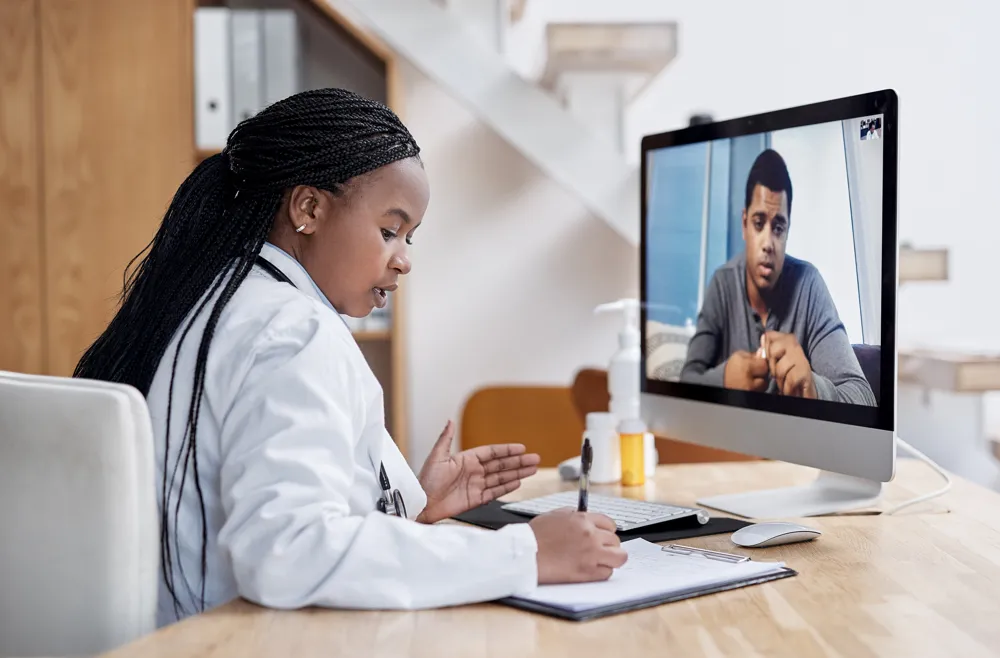
According to a study conducted during the COVID-19 pandemic, telemedicine seems to effectively eliminate the historical racial gap in show rates to follow-up appointments after hospitalizations.…
AI summary
A study by researchers at the University of Pennsylvania's Perelman School of Medicine, analyzing data from 2019-2021, found that show rates at follow-up appointments after hospitalization rose among Black patients from 52 to 70 percent when telemedicine became a main mode for primary care visits during the COVID-19 pandemic. This was comparable to White patients' 67 percent completion rate by mid-2020, effectively eliminating the historical racial gap. Researcher Eric Bressman noted racial inequities in geographic access to primary care and said telemedicine might level the playing field. Across all patients after June 2020, telemedicine cut the time from discharge to first follow-up by a day and a half, raised completion rates by 22 percent and increased follow-up within a week by 8 percent. The study was published in the Journal of General Internal Medicine. Bressman said telemedicine can remain a vital access point and is worth continued investment despite evolving issues around quality, payment and regulation. The article closes with background on Penn Medicine.
- Show rates at post-hospitalization follow-ups rose among Black patients from 52 to 70 percent with telemedicine, comparable to 67 percent for White patients by mid-2020.
- The study, using 2019-2021 data, found the historical racial gap in follow-up show rates was effectively eliminated.
- Across all patients after June 2020, telemedicine shortened time to first follow-up by a day and a half, raised completion rates by 22 percent and one-week follow-up by 8 percent.
- Eric Bressman cited racial inequities in geographic access to primary care and said telemedicine may help level the playing field.
- Researchers say the findings warrant further exploration and continued investment in telemedicine, despite evolving quality, payment and regulatory issues.