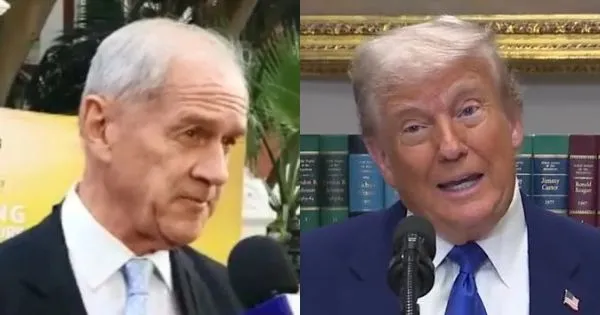
Ambassador Rejects Trump’s Claim, Says White Genocide in South Africa Does Not Exist
AI bias rating
Rated Center-left on a five-point scale from left to right.
- Left
- Center-left
- Center
- Center-right
- Right
Why this rating
- The headline and lead foreground the ambassador's rejection of the genocide claim and present Trump's position mainly as a claim to be rebutted.
- Police data showing that Black people make up most crime victims is placed right after Meyer's statement, which reinforces his argument.
- Meyer's Afrikaner identity and his role in ending apartheid are stressed, which lends him credibility.
- Afrikaner refugees get space for personal testimony, but the article notes that the woman's family was never physically harmed, which tempers her account.
- Afrikaners who question why white people are singled out are introduced with 'However', which places them as a counterweight to the testimonies.
- The refugee program is described in factual terms, with numbers on admissions and proposed expansions.
- No direct statement from the Trump administration or U.S. officials explaining the reasons for the genocide claim or the refugee program.
- No specific data on farm attacks or murder rates for white farmers is given to support or contest the claims.
- No voices from Black South Africans or township residents affected by crime.
- Land reform policy is mentioned without explaining its content or the South African government's position.
- The Afrikaner political group that holds events in Washington is not named or quoted directly.
Nationwide — Roelf Meyer, South Africa’s new ambassador to Washington, has rejected claims that white Afrikaners are facing genocide in South Africa, saying there is no evidence of a mass campaign…
AI summary
Roelf Meyer, South Africa's new ambassador to Washington and himself an Afrikaner, has rejected claims that white Afrikaners face genocide, saying there is no evidence of a mass campaign against the white minority. According to the BBC, he was surprised when President Donald Trump described violence against Afrikaners as genocide. Meyer acknowledged South Africa's serious crime problem but said it affects people across the country; police data shows Black people make up the majority of crime victims, including on farms. Trump's claims led to a U.S. refugee program for Afrikaners, through which nearly 13,000 refugees have entered, all but three from South Africa, with up to 17,500 more proposed over the next year. Some Afrikaners describe fear and attacks on farms, while others question why white people are singled out. Meyer, a negotiator who helped end apartheid alongside Ramaphosa, wants the U.S. to reconsider its policies, address the wider crime crisis and increase cooperation, and urged Afrikaner protesters in the U.S. to seek solutions inside South Africa.
- Ambassador Roelf Meyer, an Afrikaner, says there is no evidence of a genocide or mass campaign against white Afrikaners in South Africa.
- Meyer acknowledges serious crime in South Africa but says it affects all communities; police data shows most crime victims, including on farms, are Black.
- A U.S. refugee program for Afrikaners has admitted nearly 13,000 people, and the Trump administration has proposed admitting up to 17,500 more over the next year.
- Some Afrikaners cite fear and farm attacks as reasons to support the program, while others question why white people are singled out.
- Meyer, who helped negotiate the end of apartheid, urges the U.S. to reconsider its policies, cooperate on fighting crime, and calls on Afrikaner protesters to seek solutions within South Africa.