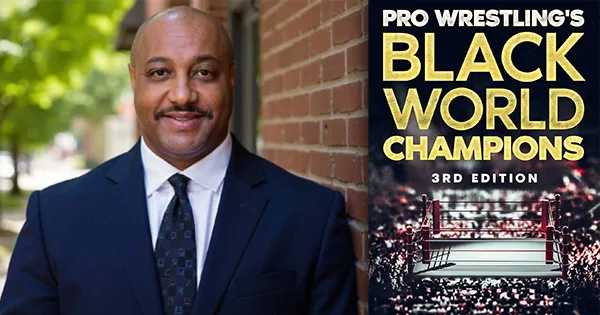
Award-Winning Author Reveals the Untold History of Black Wrestling Champions and Their Fight For Equality
AI bias rating
Rated Center-left on a five-point scale from left to right.
- Left
- Center-left
- Center
- Center-right
- Right
Why this rating
- The text reads as a promotional press release for a book rather than a news report. It ends with a call to visit the author's website.
- It ties professional wrestling history to the civil rights movement, notably by linking Bearcat Wright's title win to the March on Washington.
- Black wrestlers are framed as pioneers and cultural figures who overcame racial barriers, with emphasis on perseverance and representation.
- Awards and credentials are repeated several times to establish the book's legitimacy.
- The author's thesis is presented approvingly, with no critical evaluation of the book.
- No independent historians or wrestling historians comment on or assess the book's claims.
- Promoters and the wrestling industry of the era are not represented, nor is any account of how the industry handled race.
- The text includes no voices of the wrestlers themselves or their families.
- It gives little detail about the specific discriminatory practices beyond general statements.
- It does not acknowledge the staged nature of professional wrestling or how 'championships' were booked by promoters.
In his book, David L. Shabazz explores the untold history of Black wrestling champions, civil rights, and cultural representation Nationwide — Did you know that as America prepared for the […] The…
AI summary
Journalist, author and journalism professor Dr. David L. Shabazz examines the history of Black professional wrestlers in "Pro Wrestling's Black World Champions, Third Edition." The book covers their accomplishments, struggles and cultural significance in an industry where Black athletes often faced restrictions on opportunities, recognition and advancement. It highlights Bearcat Wright, whose championship breakthrough on August 23, 1963, came five days before the March on Washington, and pioneers such as Bobo Brazil, who helped challenge racial stereotypes. Shabazz argues that professional wrestling deserves more attention as a cultural institution that both reflected and challenged America's racial attitudes. The third edition received the 2026 National Association of Black Journalists (NABJ) Outstanding Book Award. Shabazz, a former newspaper reporter and columnist with more than three decades in journalism, education and media, hopes readers will see that Black history can be found in places traditional accounts sometimes overlook. The article directs readers to DavidLShabazz.com for more information.
- David L. Shabazz's book "Pro Wrestling's Black World Champions, Third Edition" documents the achievements and struggles of Black professional wrestlers.
- Bearcat Wright's championship breakthrough on August 23, 1963, came five days before the March on Washington; Bobo Brazil and others also challenged racial stereotypes.
- According to the article, racial prejudice and segregation affected Black wrestlers' championship opportunities, mirroring obstacles in other professions.
- Shabazz argues that wrestling is a cultural institution that both reflected and challenged America's racial attitudes.
- The third edition won the 2026 NABJ Outstanding Book Award.