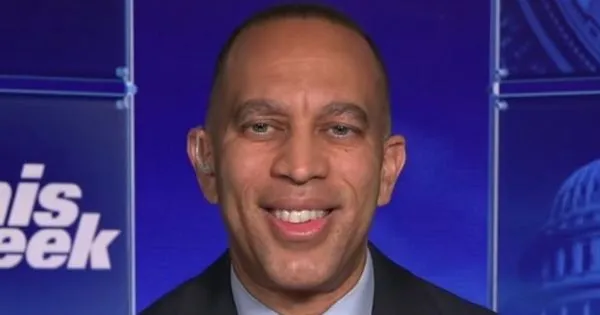
Hakeem Jeffries to Become America's First Black Speaker of the House After Democrats' Victory
AI bias rating
Rated Center-left on a five-point scale from left to right.
- Left
- Center-left
- Center
- Center-right
- Right
Why this rating
- The story is framed mainly around the historic milestone of the first Black Speaker. The partisan stakes of the Democratic takeover get less attention.
- The tone is largely biographical and celebratory. It focuses on Jeffries' education, career progression and firsts, with no critical assessment of his record.
- Jeffries' policy priorities, including 'overseeing the Trump administration', are relayed without any response or counterpoint.
- The article includes a caveat that he must still win a full House vote, which tempers the certainty of the headline.
- It closes with a historical arc linking Joseph Rainey's 1870 election to Jeffries, reinforcing the theme of progress.
- There is no reaction from Republican lawmakers or from outgoing Speaker Mike Johnson.
- The article does not mention any criticism of Jeffries' leadership record or his political positions.
- Members of the Democratic caucus, such as progressive or moderate factions, are not quoted on their views of his speakership.
- There are no voices from civil rights groups or historians on the significance of the milestone.
- The article does not discuss how Republicans might respond to Democratic oversight of the Trump administration.
Nationwide — Hakeem Jeffries is preparing to make history as the first African American person to be Speaker of the U.S. House of Representatives. The New York congressman is expected […] The post…
Quick facts
- Hakeem S. Jeffries (Democratic)
- Katherine M. Clark (Democratic)
- Mike Johnson (Republican)
- Nancy Pelosi (Democratic)
- Pete Aguilar (Democratic)