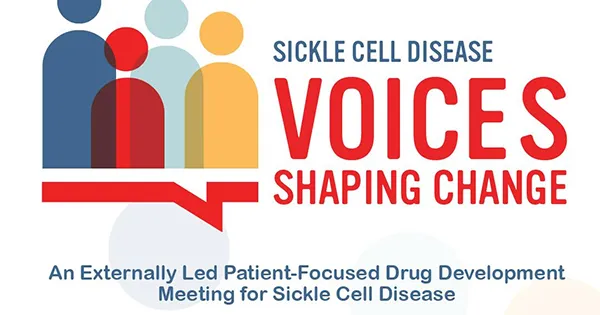
Sickle Cell Disease Association of America Inc. Hosts Externally Led Patient-Focused Drug Development Meeting on Sickle Cell Disease
Virtual meeting to bring the sickle cell community together to inform future drug development Nationwide — The Sickle Cell Voices Alliance, a partnership of the Sickle Cell Disease Association of…
AI summary
The Sickle Cell Voices Alliance, a partnership of the Sickle Cell Disease Association of America Inc., the Sickle Cell Disease Association of Canada and the Sickle Cell Society (UK), is hosting a virtual externally led patient-focused drug development (EL-PFDD) meeting. It is titled “Sickle Cell Disease Voices Shaping Change” and takes place on Wednesday, Jan. 27, 2027, from 11 a.m. to 3 p.m. EST. The forum will bring together people living with sickle cell disease, caregivers, healthcare professionals, researchers and other opinion leaders. They will share firsthand experiences and identify priorities for future therapies with the U.S. FDA and other regulatory authorities. Participants can contribute through live testimony, panel discussions, audience polling and written comments. Input will be compiled into a Voice of the Patient Report for the FDA and other stakeholders. Leaders of the three organizations encouraged worldwide participation and said treatments should reflect patients' needs and quality of life. The article describes sickle cell disease as a rare inherited blood disease with no universal cure.
- Three patient organizations from the U.S., Canada and the UK are jointly hosting a virtual EL-PFDD meeting on Jan. 27, 2027, from 11 a.m. to 3 p.m. EST.
- Patients, caregivers, clinicians and researchers will share experiences and treatment priorities with the FDA and other regulators.
- Participation options include live testimony, panel discussions, audience polling and written comments.
- Findings will be summarized in a Voice of the Patient Report submitted to the FDA and other stakeholders to inform regulatory review, trial design and innovation.
- Organizers urged global participation and called for clinically meaningful endpoints that reflect patients' quality of life.