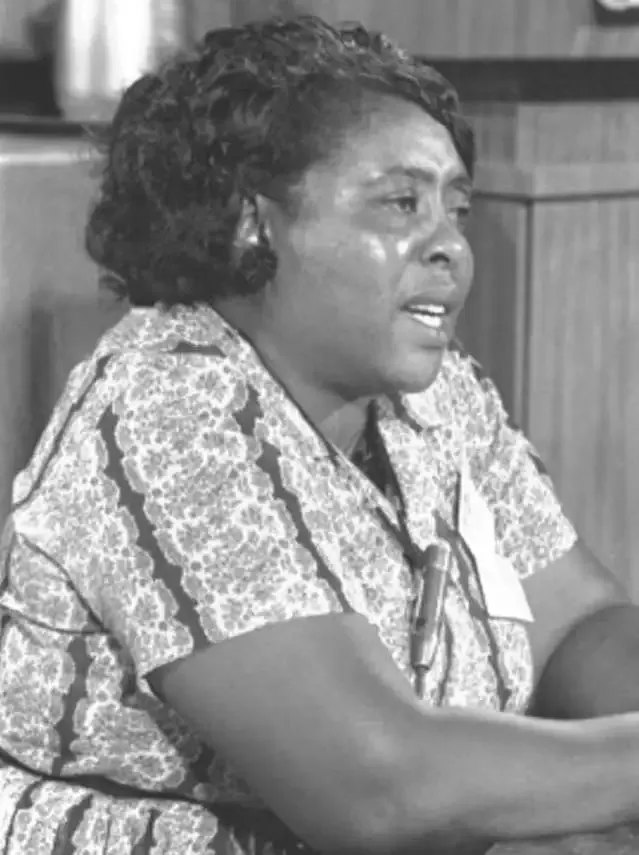
BHM100*: Remembering Fannie Lou Hamer, the Mississippi Plantation Worker Jailed and Beaten for Trying to Vote; She Fought Back as a Civil Rights Activist, Organizer and Powerful Speaker
[*This year marks the 100th anniversary since Carter G. Woodson, the “Father of Black History” founded Negro History Week in February 1926. Fifty years after…
AI summary
As part of a series marking 100 years since Carter G. Woodson founded Negro History Week in February 1926, the article remembers Fannie Lou Hamer, a Mississippi plantation worker who in the 1960s was fired, threatened by white supremacists and beaten in police custody when she tried to vote and register others. Hamer kept going, working with church activists and SNCC volunteers to register Black voters county by county. She formed the Mississippi Freedom Democratic Party and demanded to represent her state at the 1964 Democratic Convention. She fought for voting, education and economic rights, founded the Freedom Farm Collective and ran for Senate. Though not rich, traditionally educated or well-connected, she was a grassroots leader guided by the belief that "Nobody's free until everybody's free." She died in 1977 after years of serious health issues. The article recommends further resources, including a PBS documentary, her autobiography, a collection of her speeches and several biographies.
- The piece is part of a series marking the 100th anniversary of Negro History Week, founded by Carter G. Woodson in February 1926.
- Fannie Lou Hamer was fired, threatened and beaten in police custody in the 1960s for trying to vote and register others to vote.
- With church activists and SNCC volunteers, she registered Black voters across Mississippi and formed the Mississippi Freedom Democratic Party, seeking to represent the state at the 1964 Democratic Convention.
- She fought for voting, education and economic rights, founded the Freedom Farm Collective and ran for Senate; she died in 1977.
- Recommended resources include the 2022 PBS documentary Fannie Lou Hamer's America, her autobiography, a collection of her speeches and biographies by Keisha N. Blain, Kay Mills and Kate Clifford Larson.