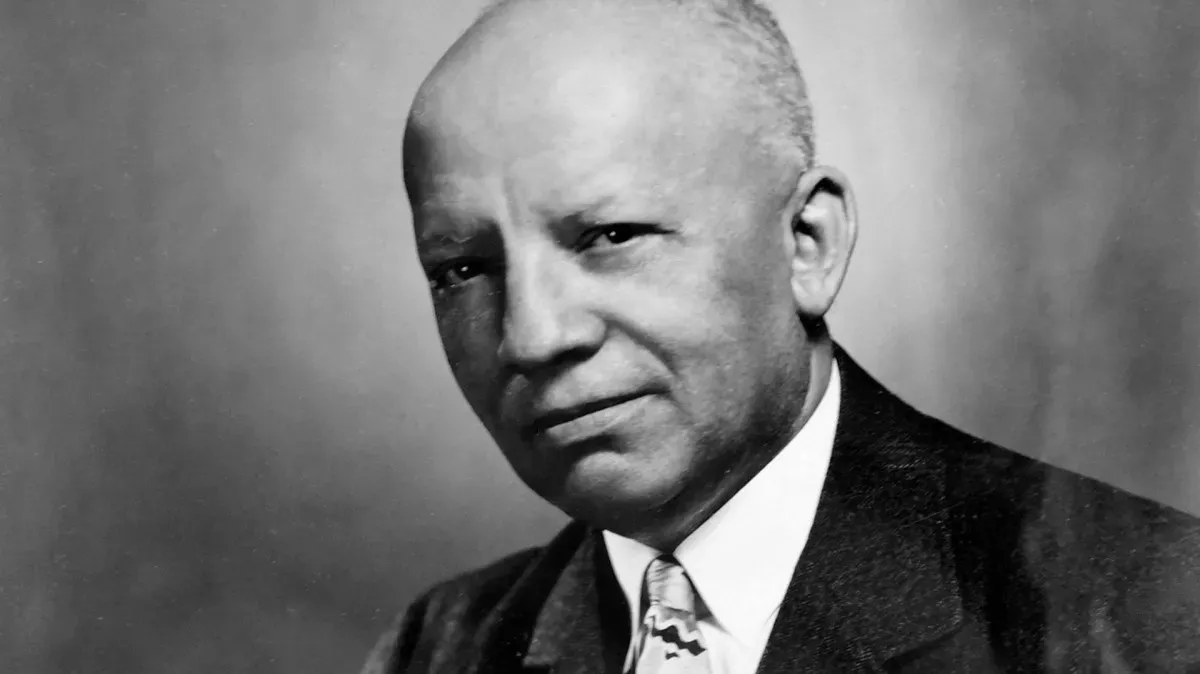
The History of Black History Month and Why Dr. Carter G. Woodson is Known as “The Father of Black History”
Born in 1875 in Virginia to formerly enslaved parents who were never taught to read and write, Carter G. Woodson often had to forgo school…
AI summary
The article traces the origins of Black History Month through the life of Dr. Carter G. Woodson. Born in 1875 in Virginia to formerly enslaved parents, he often worked instead of attending school but went on to earn advanced degrees from the University of Chicago and Harvard. There, according to the article, he came to see much of the curriculum as biased and steeped in white supremacy. In 1916 he co-founded the Journal of Negro History with Jesse E. Moreland. In 1926 he began promoting Negro History Week in the second week of February, overlapping the birthdays of Frederick Douglass and Abraham Lincoln. In 1933 he published The Mis-Education of the Negro. Kent State University students and educators proposed the first Black History Month in 1969 and celebrated it in 1970. In 1976, President Gerald Ford officially recognized it. The article says the current administration has paused Black History Month celebrations within federal agencies. It states that Woodson's work will continue to be celebrated, including at next year's centennial.
- Carter G. Woodson, born in 1875 to formerly enslaved parents, earned advanced degrees from the University of Chicago and Harvard and, per the article, saw much of the curriculum as biased.
- In 1916 Woodson co-founded the Journal of Negro History, and in 1926 he launched Negro History Week, timed to the February birthdays of Frederick Douglass and Abraham Lincoln.
- His 1933 book The Mis-Education of the Negro argued that school curricula deliberately 'mis-educated' Black children while promoting white superiority.
- Kent State University students and educators proposed the first Black History Month in 1969 and celebrated it in 1970. President Gerald Ford officially recognized it in 1976.
- The article says the current administration has paused Black History Month celebrations in federal agencies, and it states that Woodson's legacy will still be celebrated, including at next year's centennial.