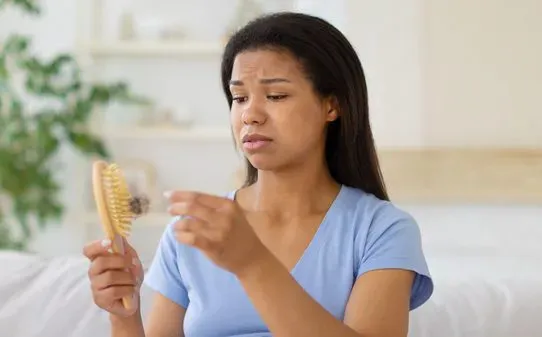
Not The Edges! Why Ozempic Users Are Freaking Out Over Hair Loss
GLP-1 medications, used to treat diabetes and obesity, may unexpectedly lead to hair loss, according to experts. Here's what we know. The post Not The Edges! Why Ozempic Users Are Freaking Out Over…
AI summary
The article reports that hair loss is a side effect getting attention among people taking GLP-1 weight-loss drugs such as Ozempic, Wegovy and Mounjaro. Experts quoted by HuffPost say the drugs may not directly cause it, but there is a strong association between GLP-1 drugs, rapid weight loss and hair shedding. Dermatologist Dr. Lauren Kole says the physical stress of fast weight loss and calorie or nutrient deficits can trigger telogen effluvium. In this condition, follicles enter a resting phase and the hair sheds two to three months later. It is usually temporary, with regrowth in six to 12 months. A 2025 preprint study found people on semaglutide had a 50% higher chance of a hair-loss diagnosis than people on bupropion-naltrexone, with the risk about twice as high in women as in men. A 2026 study of more than 12,000 people with type 2 diabetes found a higher risk of mainly non-scarring alopecia with GLP-1 drugs than with other diabetes drugs. The researchers said the absolute risk was low and the finding shows an association, not proof of cause. The article advises people with significant or persistent hair loss to talk with their doctor.
- Experts say GLP-1 drugs may not directly cause hair loss, but hair shedding is strongly associated with these drugs and the rapid weight loss they bring.
- According to Dr. Lauren Kole, the likely cause is telogen effluvium, a usually temporary shedding triggered by bodily stress, with hair generally regrowing within six to 12 months.
- A 2025 preprint study found a 50% higher chance of a hair-loss diagnosis with semaglutide than with bupropion-naltrexone, and the risk in women was about twice that in men.
- A 2026 study of more than 12,000 people with type 2 diabetes found a 37% to 68% higher risk of mostly non-scarring alopecia with GLP-1 drugs than with SGLT-2 or DPP-4 inhibitors, though absolute risk was low and causation was not proven.
- The article advises people with significant or persistent hair loss while on a GLP-1 drug to talk with their doctor about possible causes and a plan.