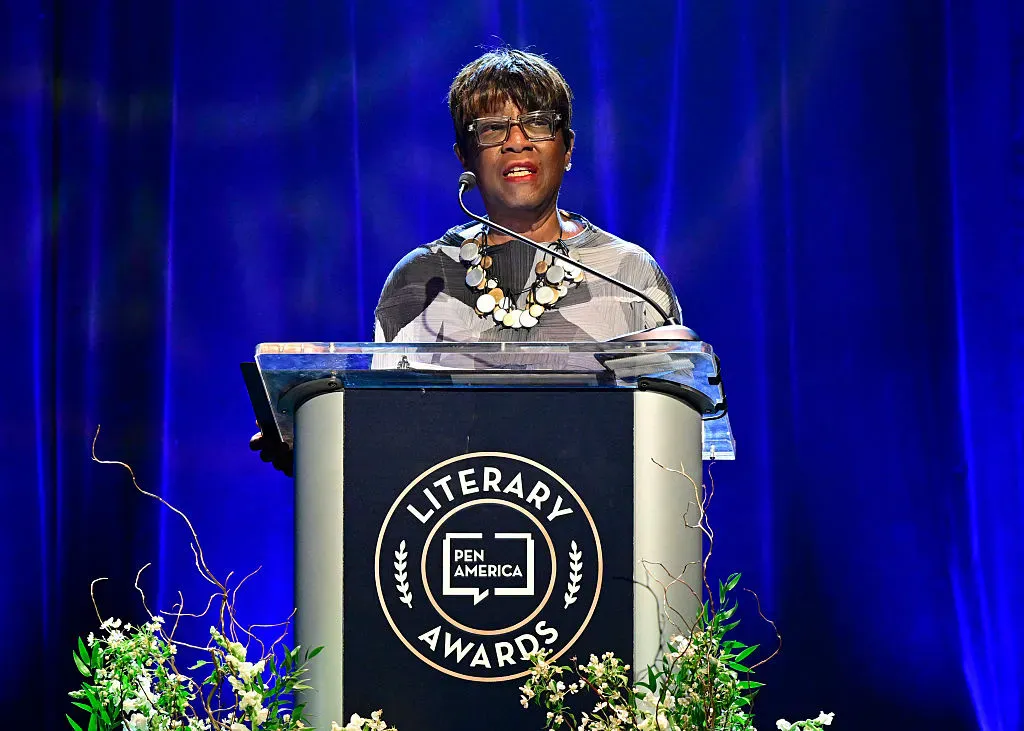
Who Is Patricia Smith? The Award-Winning Poet Redefining American Literature
Patricia Smith, the National Book Award-winning poet, is redefining American literature with work rooted in Black history and resilience.
AI summary
Patricia Smith, 70, won the National Book Award in Poetry on Nov. 19 for "The Intentions of Thunder: New and Selected Poems," according to NPR. The other finalists were Gabrielle Calvocoressi, Cathy Linh Che, Tiana Clark and Richard Siken. Released Sept. 30, the collection gathers new and selected poems on pain, history, joy and the future. Its publisher, Simon and Schuster, calls it "a rapturous ode to life." Smith began as a journalist. She attended a poetry event at a blues bar, with Gwendolyn Brooks in the audience, and was drawn into Chicago's slam scene, where she won several national titles. In the '90s, Luis Rodriguez of Tia Chucha Press asked her for a manuscript, which became her debut "Life According to Motown." Her later books include "Incendiary Art" and "Blood Dazzler." Her honors include a Pulitzer Prize finalist designation, a Kingsley Tufts Award and NAACP Image Awards. She has taught at CUNY, Cave Canem, StoryStudio Chicago and Princeton. She names Brooks as her greatest influence. The article says the award strengthens her standing in American literature.
- Patricia Smith won the National Book Award in Poetry on Nov. 19 for "The Intentions of Thunder: New and Selected Poems," ahead of four other finalists.
- The collection, released Sept. 30, combines new and selected poems; the publisher calls it "a rapturous ode to life."
- Smith started as a journalist, rose through Chicago's slam poetry scene winning national titles, and debuted on the page with "Life According to Motown."
- Her honors include a Pulitzer Prize finalist designation, a Kingsley Tufts Award, NAACP Image Awards and several fellowships; she has taught at CUNY, Cave Canem, StoryStudio Chicago and Princeton.
- Smith calls Gwendolyn Brooks her greatest influence, saying Brooks taught her to see her own self, neighborhood and people as "viable and utterly beautiful."