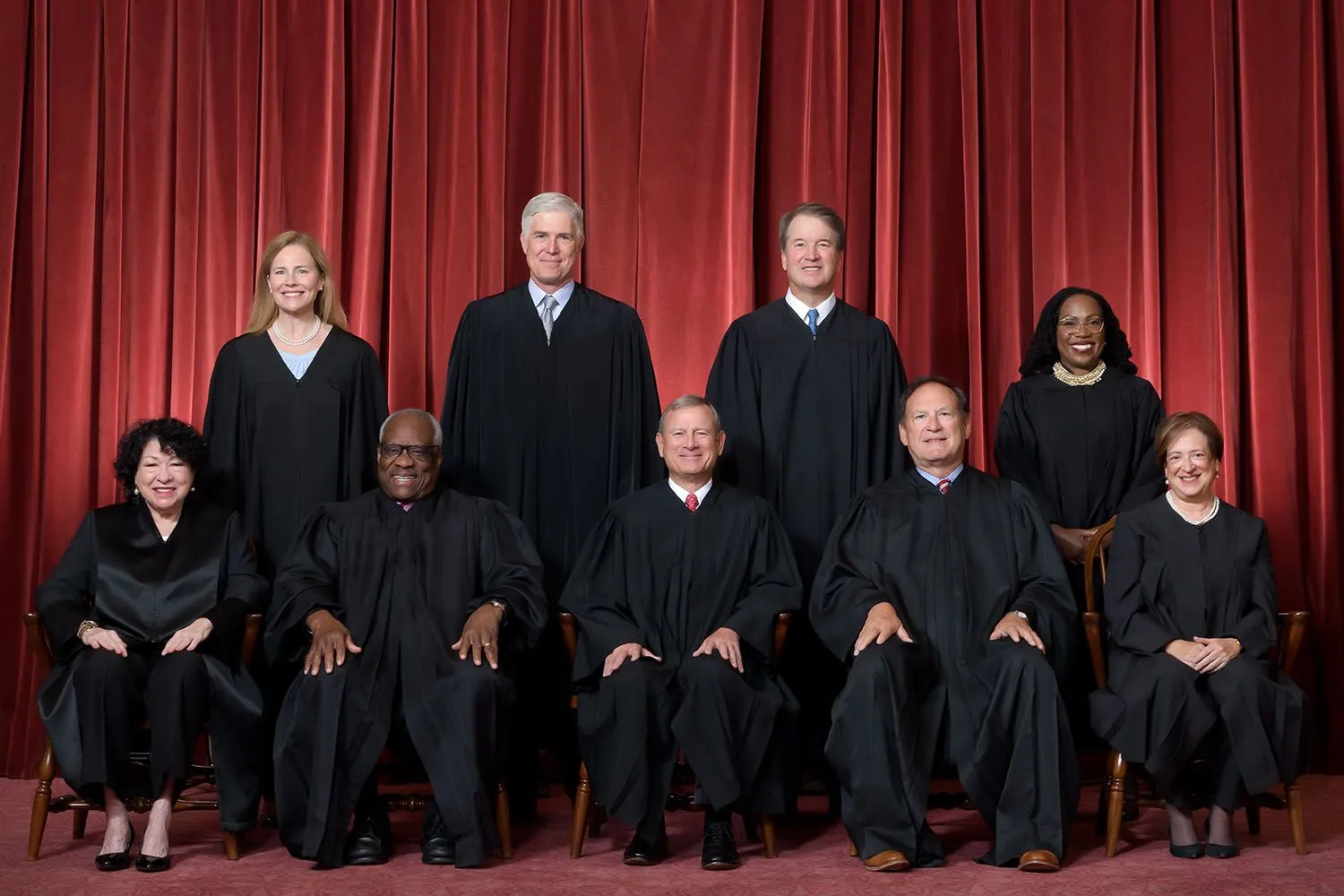
9 Justices, Zero Accountability, And A Whole Lot Of Problems
From expanding the Court to ethics reform and term limits, Democrats have a long list of ways to address a judiciary with a serious accountability problem.
AI summary
In this opinion piece, the author argues that the new Democratic-leaning Congress will have to address what the author calls the Supreme Court problem, citing rulings on presidential power, voting, abortion and executive authority. The author backs expanding the Court from nine to 13 justices, noting that Congress, not the Constitution, sets its size, and accuses Republican-appointed justices of lying in confirmation hearings. The piece criticizes Justice Clarence Thomas's ties to benefactor Harlan Crow and says the Court's 2023 Code of Conduct is not enforced. It calls for enforceable ethics and recusal rules, 18-year term limits as proposed in legislation Sen. Sheldon Whitehouse reintroduced in July 2026, and more transparency for the emergency 'shadow docket.' The author acknowledges that Democrats lack 60 Senate votes to overcome a filibuster and cannot override a presidential veto. Even so, the author says they can hold hearings, investigate justices and introduce legislation, and argues that justices should follow the same accountability rules as other Americans.
- The author supports adding four seats to bring the Court to 13 justices, noting that Congress sets the number by ordinary legislation, and argues this would counter what the author calls a MAGA imbalance.
- The author criticizes Clarence Thomas's relationship with Harlan Crow, including Crow buying Thomas's childhood home and paying for his grandnephew's education, and says the Court's 2023 Code of Conduct lacks enforcement.
- The author favors 18-year term limits with a new justice every two years, an approach in legislation reintroduced by Sen. Sheldon Whitehouse and Democratic colleagues in July 2026.
- The author calls for enforceable recusal rules, including written explanations and independent review of disputed recusals, and for more transparency on how emergency 'shadow docket' cases are defined.
- The author notes Democrats lack the votes to overcome a filibuster or a veto but argues they can still hold hearings, investigate justices and introduce legislation.