Mississippi Election Shows The Power Of Black Voters
Usually written off as a red state, Mississippi sits on the verge of defying national expectations by electing a Black senator.
AI summary
The article, an opinion-style piece, says Mississippi is on the verge of electing Democrat Scott Colom to the U.S. Senate, with absentee and affidavit ballots still being counted. Mississippi and Alaska are the last two states to call their Senate races. The author credits Black voters and local organizers, saying they worked to ensure ballots were properly counted, and calls Mississippi's voting challenges a system feature tied to Jim Crow. Advocates cited problems including the Secretary of State using Experian data to move voters to an inactive list, and a gap between when poll books are printed (45 days before the election) and when registration closes (30 days). The article notes Mississippi lacks no-excuse early voting and online voter registration, and describes the proposed Robert G. Clark, Jr. Voting Rights Act, which groups introduced after the Supreme Court weakened Section 2 of the federal Voting Rights Act. As of Tuesday morning, Colom held a strong lead and would be the state's first Black senator in over 100 years. Three years ago, outgoing Sen. Cindy Hyde-Smith blocked his nomination as a federal judge.
- Scott Colom held a strong lead as of Tuesday morning in Mississippi's Senate race, with absentee and affidavit ballots still being counted; Mississippi and Alaska are the last states to call their Senate races.
- If elected, Colom would be Mississippi's first Black U.S. senator in over 100 years; Sen. Cindy Hyde-Smith blocked his federal judge nomination three years ago.
- Advocates raised concerns about the Secretary of State using Experian data to move voters to an inactive list, and about poll books being printed 45 days before the election while registration closes 30 days before.
- The article notes Mississippi has no no-excuse early voting and is one of eight states without online voter registration; groups back the proposed Robert G. Clark, Jr. Voting Rights Act.
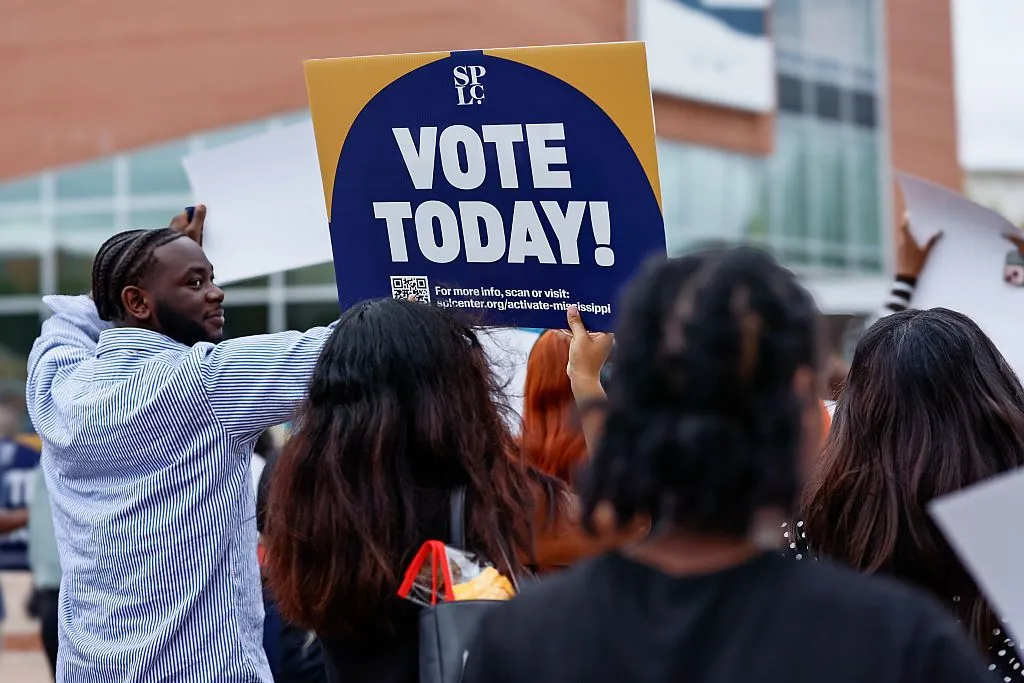
- The author and organizers credit decades of local organizing, including registering students on college campuses, for the result.