Joe Nerds Out About The Lucas Museum Of Narrative Art
George Lucas and Mellody Hobson’s museum, which opened to the public on Tuesday, has over 30 galleries, including illustrations, props, and models from the Star Wars films.
AI summary
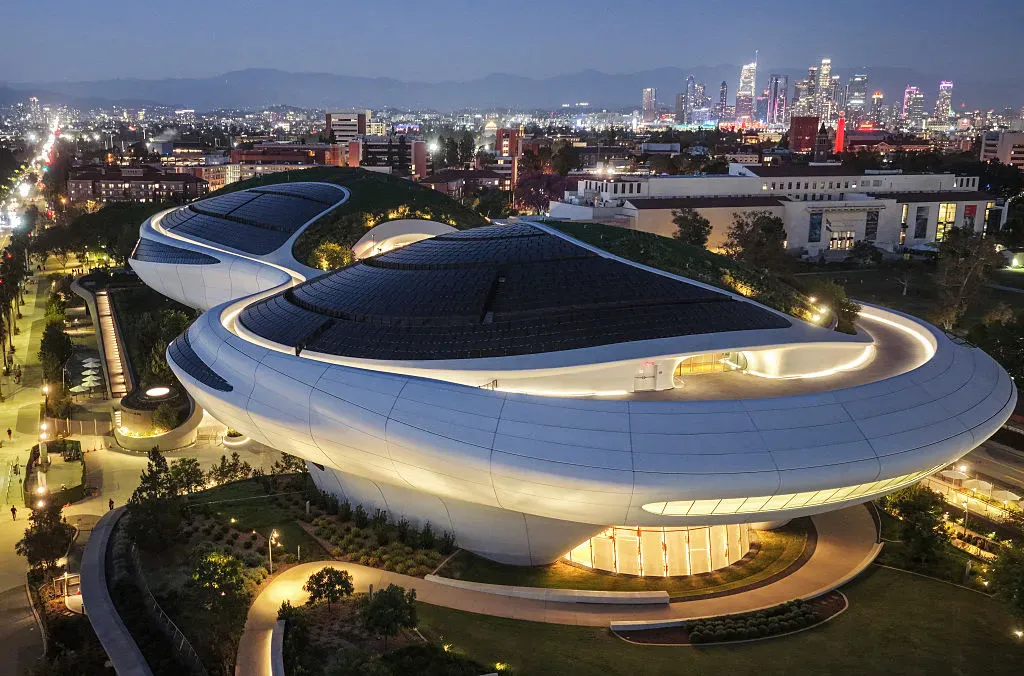
The Lucas Museum of Narrative Art, founded by George Lucas and his wife Mellody Hobson, opened to the public on Tuesday in Los Angeles' Exposition Park area, KTLA reports. According to the article, Lucas spent the 14 years since selling Lucasfilm to Disney in 2012 working to get the museum off the ground. It has over 30 galleries across 100,000 square feet, a building the author likens to a futuristic spaceship, and gardens with statues depicting moments from Lucas' films. The Lucas Archives display illustrations and props from the Lucasfilm archives from the 1970s to 2012, including props from the six Star Wars films Lucas helped produce, yet make up only about 7% of the displays. The rest covers film, comics, manga, and modern and contemporary art. Lucas said the focus is on honoring illustrators. The museum also has two movie screens and a library. Adult tickets cost $25, while children, teens and EBT holders get in free. The author, a self-described Star Wars and museum fan, calls it a community-minded institution rather than a vanity project and looks forward to visiting.
- The Lucas Museum of Narrative Art, founded by George Lucas and Mellody Hobson, opened to the public on Tuesday in Los Angeles' Exposition Park area.
- The museum has over 30 galleries across 100,000 square feet, surrounded by gardens with statues of moments from Lucas' films.
- The Lucas Archives feature illustrations and props from the 1970s to 2012, including Star Wars props, but make up only about 7% of the displays; other works span film, comics, manga, and modern and contemporary art.
- Lucas told KTLA the museum aims to honor illustrators, saying illustrations 'make' stories real; the museum also includes two movie screens and a library.
- Adult tickets are $25, with free entry for children, teens and EBT holders; the author sees this as evidence the museum is meant to enrich the community.