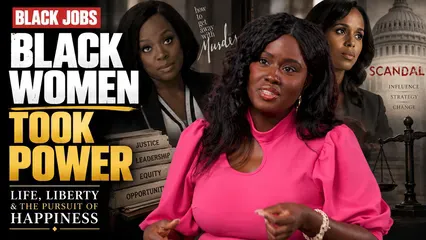
How Black Women Redefined Power on TV | Life, Liberty and the Pursuit of Happiness
The episode also examines the pressure Black Americans face to be twice as good to receive equal recognition
AI summary
This episode of Life, Liberty and the Pursuit of Happiness looks at how television characters played by Black women challenged traditional ideas of race, gender, success and power in America. It centers on Kerry Washington as Olivia Pope in Scandal and Viola Davis as Annalise Keating in How to Get Away with Murder. The episode examines how Black women moved beyond limitations historically placed on them to become some of television's most influential and complex characters, citing Olivia Pope's political influence and intelligence and Annalise Keating's unapologetic demand to be paid for her experience and accomplishments. According to the description, these characters challenged Hollywood's portrayal of Black women and redefined leadership, ambition and professional success. The episode also covers the pressure on Black Americans to be twice as good to receive equal recognition, the importance of knowing one's worth, and how these fictional portrayals reflect the real-life achievements of Black women whose contributions have often been overlooked. It argues that these stories helped reshape how America sees Black women in positions of authority, influence and power.
- The episode explores how TV characters played by Black women challenged traditional ideas of race, gender, success and power in America.
- It focuses on Kerry Washington as Olivia Pope in Scandal and Viola Davis as Annalise Keating in How to Get Away with Murder.
- Olivia Pope is highlighted for her political influence and intelligence, and Annalise Keating for demanding to be paid for her experience and accomplishments.
- The episode discusses the pressure on Black Americans to be twice as good for equal recognition, and the importance of knowing one's worth.
- It links these fictional portrayals to the often-overlooked real-life achievements of Black women and to how America sees Black women in authority.