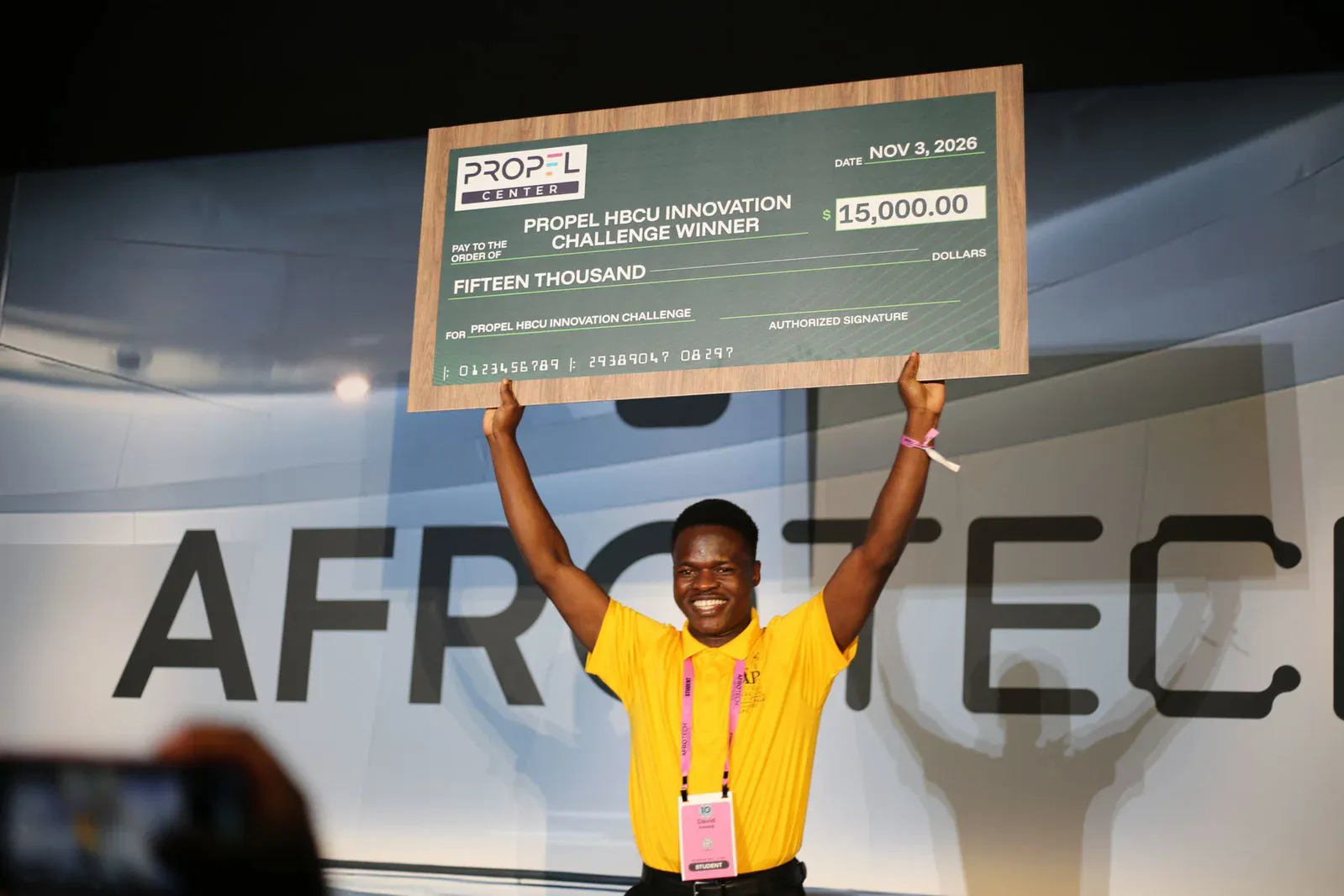
HBCU Students Secure $15K For App Helping Gen Z Build Financial Literacy
Its features allow users to identify borrowed funds within financial aid refunds, prioritize essential expenses, and practice investing with simulated money before risking actual savings.
AI summary
Three University of Arkansas at Pine Bluff students, David Adedeji, Nicholas Nettey and Angel Yuzya, won the $15,000 top prize at the inaugural Future of XYZ HBCU Innovation Challenge for Brix, a financial coaching app for first-generation and first-year college students, according to the PROPEL Center. The competition, held Nov. 2-3 during AfroTech week in Houston, drew applications from more than 30 HBCUs, with ten finalist teams from nine HBCUs pitching to industry professionals. Brix helps users manage financial aid refunds, including identifying borrowed funds, budget first paychecks, prioritize essential expenses and practice investing with simulated money. The team's research found 66% of surveyed students had never bought a stock and 74% were interested in simulated investing. Participants received three weeks of mentor coaching, and Apple, PROPEL's founding partner, hosted a networking breakfast. PROPEL says the initiative expands HBCU students' access to technology, entrepreneurship and professional development; it follows the Future of Tech Innovation Challenge, which awarded more than $120,000 earlier this year.
- University of Arkansas at Pine Bluff students won $15,000 at the inaugural Future of XYZ HBCU Innovation Challenge for the financial literacy app Brix.
- Brix helps first-generation and first-year students handle financial aid refunds, budget paychecks, prioritize expenses and practice investing with simulated money.
- The team's survey found 66% of students had never purchased a stock and 74% wanted to practice investing with simulated funds.
- The Houston competition drew applications from more than 30 HBCUs; ten finalist teams from nine HBCUs received three weeks of mentor coaching.
- PROPEL's president Harriette K. Burrell said HBCU students have lacked access to resources and relationships, not talent.