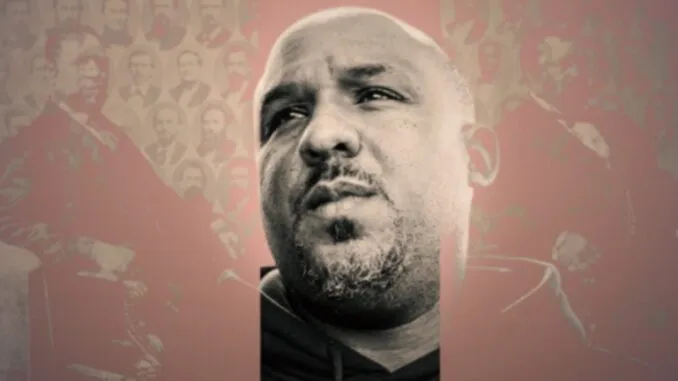
Black voters made history. They laid the groundwork for a Third Reconstruction.
AI bias rating
Rated Left on a five-point scale from left to right.
- Left
- Center-left
- Center
- Center-right
- Right
Why this rating
- The piece is an advocacy op-ed by the CEO of an organization involved in the mobilization, written in the first person plural ('we').
- The election is framed as a victory of Black women and Black-led organizations over a Republican and Trump administration 'overreach'.
- Opponents (the Trump administration, GOP lawmakers, the Supreme Court) are portrayed as acting with hostile intent toward Black voters.
- History is used as a framing device: Reconstruction, Blanche K. Bruce, Medgar Evers and Fannie Lou Hamer are linked to a proposed 'Third Reconstruction'.
- The result is treated as a mandate for specific policies: fair maps, early voting, online registration, housing and health care.
- The author's own organization and its allies are prominently credited and promoted.
- Exit poll data from the author's own organization is cited to support the policy agenda.
- Republican lawmakers' or the Trump administration's rationale for the redistricting, the Smithsonian review or the DEI rollbacks.
- The Supreme Court's reasoning in Louisiana v. Callais.
- Views of voters who did not support Scott Colom.
- Independent analysis of the factors behind the election result beyond the organizing effort.
- Details about the opposing candidate or the campaign itself.
- Arguments against expanding early voting or online registration.
By Melanie L. Campbell, CEO of the (NCBCP), Mississippi’s election of Scott Colom was the crown jewel of a Southern mobilization led by Black women and black-led organizations. The new governing…
AI summary
In an opinion piece, Melanie L. Campbell, CEO of the NCBCP, calls Scott Colom's election as Mississippi's first Black U.S. senator since Blanche K. Bruce left office in 1881 the crown jewel of a Southern mobilization led by Black women and Black-led organizations. She writes that it followed Trump administration pressure on the Smithsonian, book removals, DEI rollbacks and the Supreme Court's Louisiana v. Callais ruling, after which GOP lawmakers redrew maps that she says dilute Black political power. She credits coalitions built over years, including the All Roads Lead to the South Coalition and Mississippi groups working year-round, as a firewall. Campbell argues the win is a mandate for a Third Reconstruction: new majorities should redraw unfair districts through a public process, expand early voting and ease registration, and address concerns from an NCBCP exit poll such as racism, hate crimes and the cost of living. She says Black women organizers should help shape the agenda, officials should report back to voters, and local organizers need continued investment.
- Campbell calls Scott Colom's election as Mississippi's first Black U.S. senator since 1881 the result of a Southern mobilization led by Black women and Black-led organizations.
- She links the turnout to reactions against the Louisiana v. Callais ruling, redistricting by GOP lawmakers in the South, DEI rollbacks and pressure on the Smithsonian.
- She credits years of coalition-building by groups such as NCBCP, Black Voters Matter, LDF, the Mississippi NAACP and others as a 'firewall.'
- She urges new majorities to redraw unfair districts through a public process, expand early voting and ease registration; Mississippi coalitions will push for early voting and online registration in January.
- Per the NCBCP exit poll, three in four Black voters said they voted out of responsibility; racism and hate crimes topped community concerns, and the cost of living was the biggest household threat.