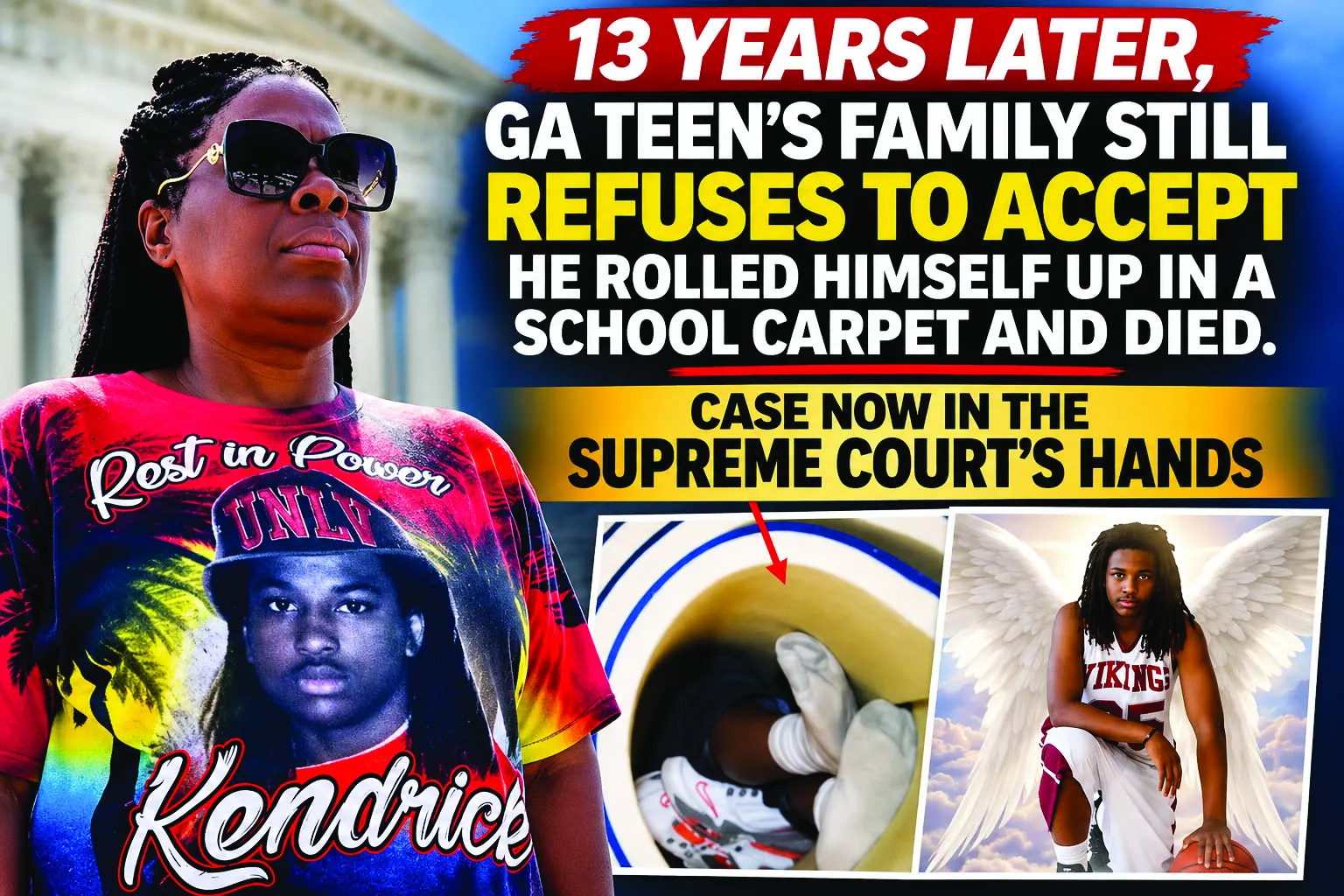
13 Years After Being Found Rolled Up in His School’s Carpet, One Teen’s Family Takes Fight for Justice to U.S. Supreme Court
Georgia teen’s mysterious death inside a high school gym mat continues to raise questions about conflicting autopsies, investigative transparency and whether race influences whose deaths receive…
AI summary
More than 13 years after 17-year-old Kendrick Johnson was found dead inside a rolled-up wrestling mat at Lowndes High School in Valdosta, Georgia, his parents, Kenneth and Jacqueline Johnson, have taken their fight to the U.S. Supreme Court. On Oct. 30, 2026, the Court docketed a petition involving the family and the Georgia Bureau of Investigation as Case No. 26-5998. This does not mean the Court has agreed to hear the case; the justices must first decide whether to review it. Investigators concluded that Kendrick became trapped while reaching for a shoe and died of positional asphyxia, and the GBI medical examiner ruled the death accidental. An independent autopsy after exhumation reported findings consistent with blunt force trauma. The family also raised concerns about surveillance footage, evidence handling and the condition of his remains. The article states these issues did not establish murder or a deliberate cover-up, and investigators have repeatedly reported insufficient evidence for charges. The case has become part of a broader debate about whether investigations into the deaths of Black children receive equal thoroughness and transparency.
- Kendrick Johnson, 17, was found dead Jan. 11, 2013, upside down inside a vertically stored wrestling mat in his Georgia high school's gym.
- The GBI medical examiner ruled the death accidental, from positional asphyxia, while a private autopsy after exhumation reported findings consistent with blunt force trauma.
- The family raised concerns about surveillance footage, evidence handling and the use of newspaper in place of removed organs; the medical examiner's office disputed allegations of improper handling.
- The Supreme Court docketed the family's petition on Oct. 30, 2026, as Case No. 26-5998, but has not decided whether to hear it; if it declines, the lower court ruling stands.
- The case has become a subject of civil rights advocacy over whether families receive equal thoroughness and transparency regardless of race or economic standing.