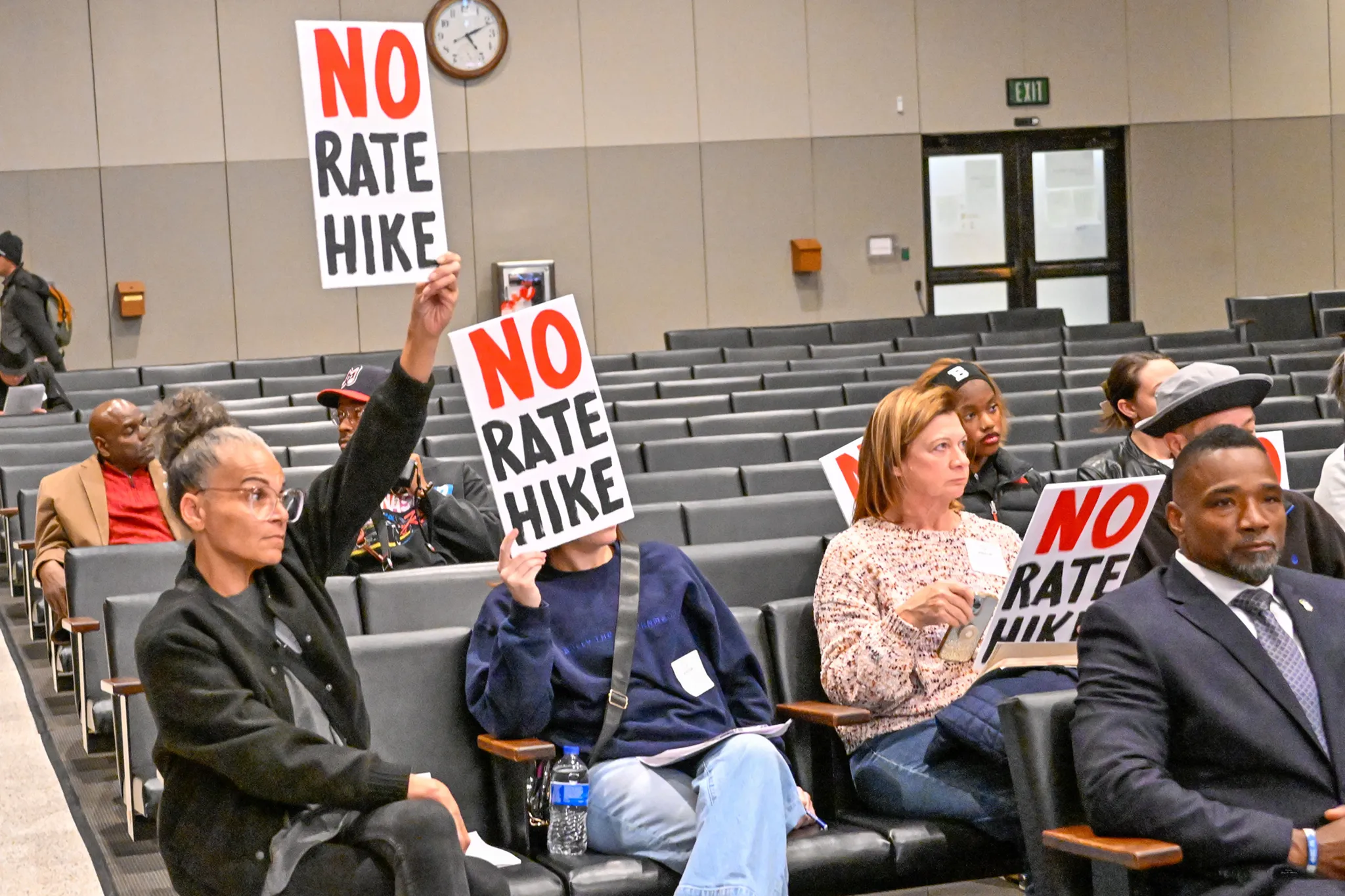
Council pauses on MLGW rate hikes; approves bill relief program for low income ratepayers
Memphis City Council members kept their powder dry on proposed rate hikes by Memphis, Light Gas and Water on Tuesday, Nov. 24. MLGW Committee members approved a series of gas and water bonds that…
AI summary
On Nov. 24, the Memphis City Council delayed final votes on proposed MLGW rate increases to give the public further notice, with the matters set for Dec. 8. MLGW Committee members approved gas and water bonds for infrastructure projects, including a $20 million loan from the gas division to the water division, with rate increases intended to cover the bonds. An alternative under discussion would keep the current water rate stable for a year before increases begin, a plan backed by Protect Our Aquifer, which wants the gap year used to explore a more progressive rate structure. MLGW CEO Doug McGowen said he would check the impact of such a delay, which could mean higher increases for commercial, industrial and data center customers and could raise legal issues. The council also paused a vote on MLGW's FY2027 budget until Dec. 8. Separately, the council approved a resolution by Councilwoman Jerri Green creating a $1.3 million annual water relief program for low-income ratepayers, funded by surplus revenue from a higher MLGW paving permit fee and using Plus One program criteria.
- The council delayed final votes on MLGW rate increases and the FY2027 budget until Dec. 8, after committee approval of gas and water bonds, including a $20 million gas-to-water division loan.
- An alternative plan supported by Protect Our Aquifer would hold the water rate steady for one year and use that time to explore progressive rate changes.
- MLGW's proposal would raise average residential water bills by $10 and gas bills by $17.50 over three years; delaying the water increase could mean 20% hikes for commercial and industrial users and up to 30% for data centers.
- A resolution by Councilwoman Jerri Green creates a $1.3 million annual water relief program that could help 7,000 to 27,000 low-income customers, depending on how it is administered.
- The relief program is funded by surplus city revenue from raising MLGW's paving permit fee from $25 to $750, and will use the same eligibility criteria as MLGW's Plus One program.