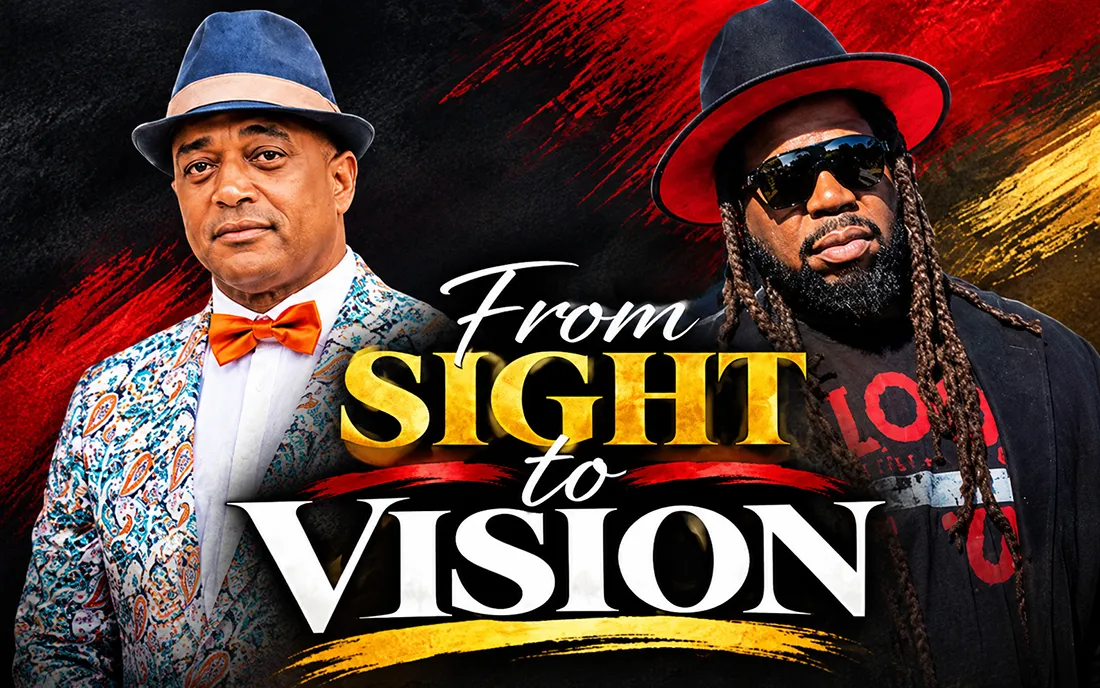
From Sight to Vision
African Americans and Hispanics, experience diabetes rates that are 60% higher than those of white populations, and racial and ethnic minorities face a greater burden of diabetes-related…
AI summary
Nunnie Robinson describes how diabetes, once called "Sugar," has affected her family: a great-aunt with infected sores in the 1950s, a brother who died after COVID-19 combined with diabetes, a niece and her son with kidney failure, and a grandson with Type 1 diabetes. She notes that African Americans and Hispanics have diabetes rates 60% higher than white populations and face more complications. With Bobby R. Henry, Sr., she presents the testimonies of Lenroy Ellis and Devon "Baby" Palmer, shared at a Kidney Walk during Omega Psi Phi Fraternity Achievement Week. Ellis, diagnosed with Type 2 diabetes in 1998, lost his sight, had kidney failure and a transplant, and relearned to walk; he says he "lost sight, but gained vision." Palmer, diagnosed with Type 1 as a teenager, ignored the disease and is now legally blind. Both credit family, faith and support, and urge prevention: eating right, exercising, monitoring glucose and seeing doctors early.
- The article states African Americans and Hispanics have diabetes rates 60% higher than white populations and face more complications such as kidney disease and amputations.
- Co-author Nunnie Robinson recounts diabetes's devastating impact on her family, including a brother who died after contracting COVID-19 while diabetic.
- Lenroy Ellis, a kidney transplant recipient with Type 2 diabetes since 1998, lost his sight and says prevention is rarely taught in the community.
- Devon "Baby" Palmer, diagnosed with Type 1 diabetes as a teen, ignored warning signs for years and is now legally blind.
- Both men credit family and faith and urge others to eat right, exercise, monitor glucose, see doctors and eye doctors, and not wait.