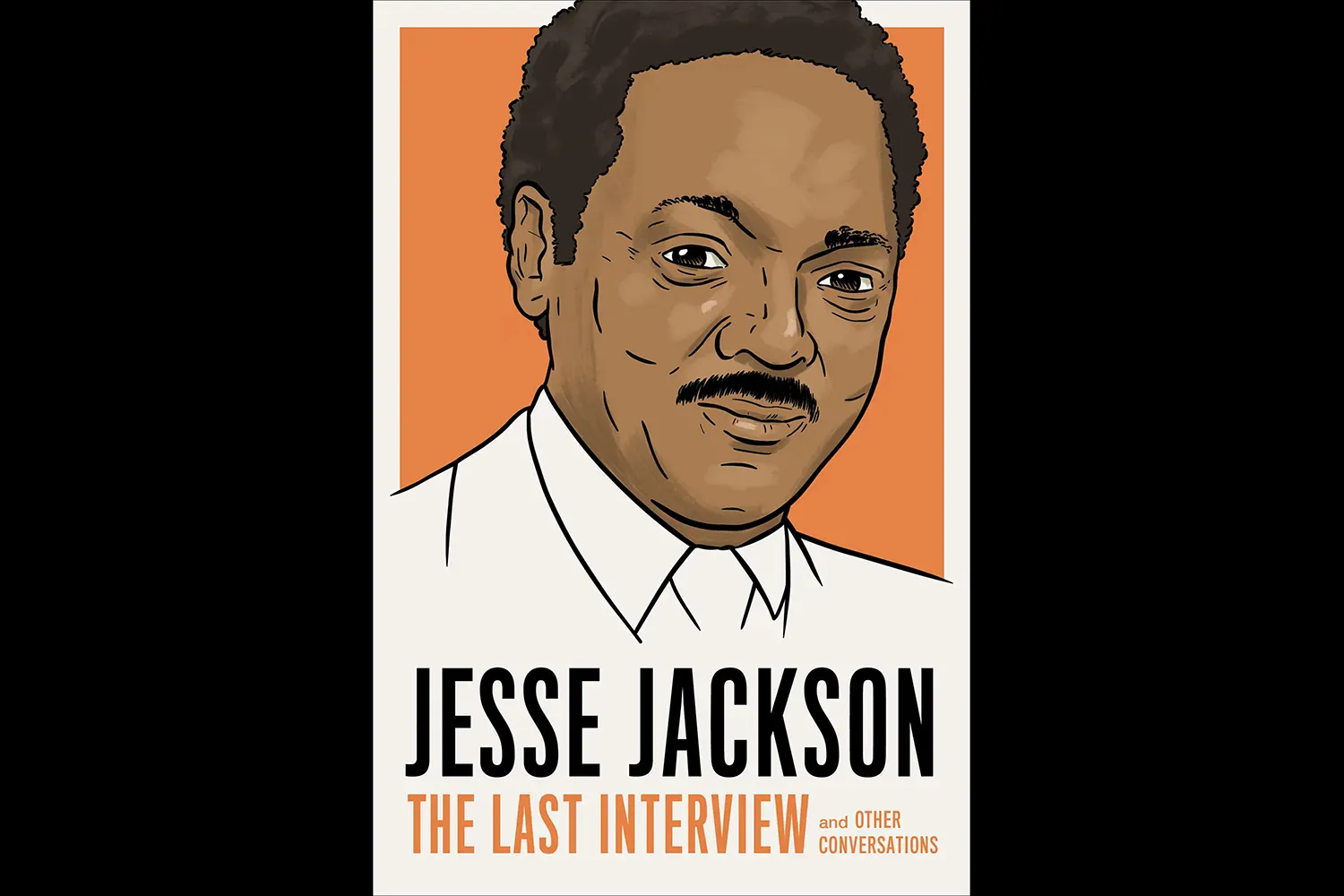
“Jesse Jackson: The Last Interview and Other Conversations” reads like history repeating itself
“Jesse Jackson: The Last Interview and Other Conversations” with an introduction by Al Sharpton, c.2026, Melville House Publishing, $20.99, 175 pages Even as a young man, the Rev. Jesse Jackson was…
AI summary
The article reviews "Jesse Jackson: The Last Interview and Other Conversations" (Melville House Publishing, 2026, $20.99, 175 pages), an anthology of interviews with the Rev. Jesse Jackson with an introduction by the Rev. Al Sharpton. It recounts Jackson's work building Operation Breadbasket in Chicago for Dr. Martin Luther King Jr., founding Operation PUSH (now Rainbow/PUSH), and his presence at King's assassination in 1968. The book collects interviews on race, politics and social justice: a 1969 Playboy interview criticizing the elimination of Black studies and describing a "police state" targeting Black men; a 1975 "Black Journal" appearance blaming economic woes on the superrich not being taxed properly; a 1983 New York Times remark that the Justice Department was not committed to justice; and a 1989 "Eyes on the Prize II" comment on the possibility of an African American president, following his 1984 and 1988 campaigns. The reviewer finds Jackson's observations strikingly relevant today and calls him a visionary, concluding that the book reaffirms the adage that the more things change, the more they stay the same.
- The anthology from Melville House, introduced by Al Sharpton, compiles Jesse Jackson's interviews and appearances on race relations, politics and social justice.
- The article highlights Jackson's role in Operation Breadbasket, his founding of Operation PUSH (now Rainbow/PUSH), and his presence with Dr. King at the Lorraine Motel in 1968.
- In 1969 Jackson told Playboy that the U.S. seemed to operate as a "police state" targeting Black men; in 1975 he blamed economic woes on the superrich not being taxed properly.
- In 1983 he said the Justice Department was not committed to justice, and in 1989 he spoke of a possible African American president after his own 1984 and 1988 campaigns.
- The reviewer argues Jackson's views sound like today's headlines, casting him as a visionary.