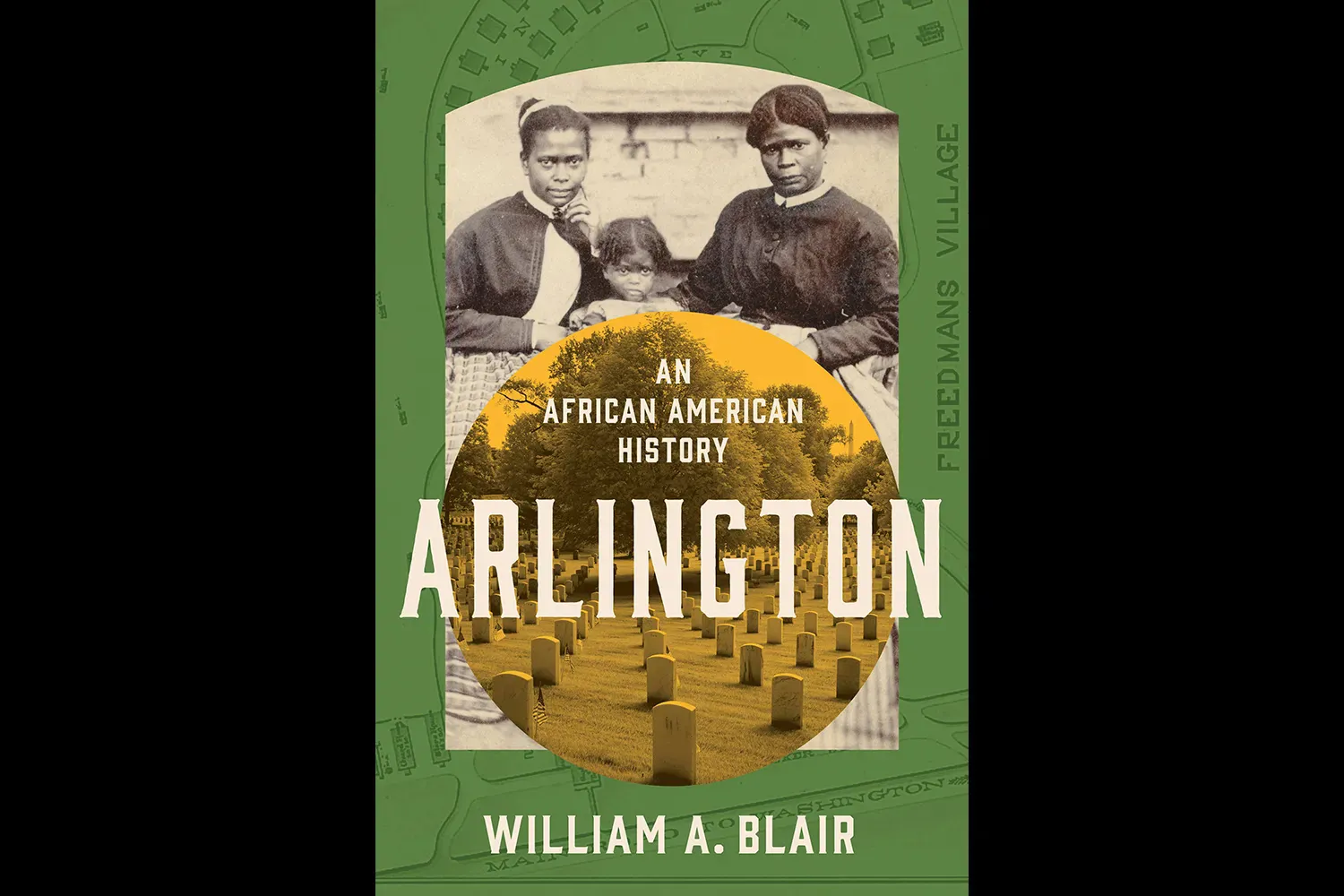
William A. Blair uncovers the overlooked Black history of Arlington National Cemetery
“Arlington: An African American History” by William A. Blair, c.2026, University of North Carolina Press, $27.95, 246 pages The tombstones line up at attention, like the soldiers beneath them once…
AI summary
This review covers "Arlington: An African American History" by William A. Blair (University of North Carolina Press, 2026, $27.95, 246 pages). It traces how the site of Arlington National Cemetery was once a home for the living. In 1802, after George Washington's death, his adopted grandson George Washington Parke Custis moved his household to an 1,100-acre tract near Washington, D.C. He ran a "gentleman's farm" worked by enslaved people who lived 10 to a cabin. After Custis died, his son-in-law Robert E. Lee became executor of the messy estate. Courts denied Lee's efforts amid rumors that the enslaved people were to be freed, and a rebellion followed. Lee reportedly ordered three people whipped for trying to escape, a story that, true or not, followed him after the Civil War. Later, a thriving community of former slaves and refugees, including Freedman's Village, formed on the grounds; their dead lie in a segregated section. The reviewer praises the book's novel-like narrative grounded in documents and interviews, and recommends it to cemetery visitors and readers of lesser-told history.
- William A. Blair's book examines the African American history of the land that became Arlington National Cemetery.
- George Washington Parke Custis moved there in 1802 and ran a farm worked by enslaved people living 10 to a cabin of up to 350 square feet.
- Robert E. Lee, as executor of Custis's estate, reportedly ordered three escapees whipped; this story, true or not, followed him after the Civil War.
- A community of former slaves and refugees, including Freedman's Village, later formed there; it is now little more than dust, and their dead lie in a segregated section.
- The reviewer finds the fact-based narrative novel-like and moving, and recommends it to visitors and fans of lesser-told history.