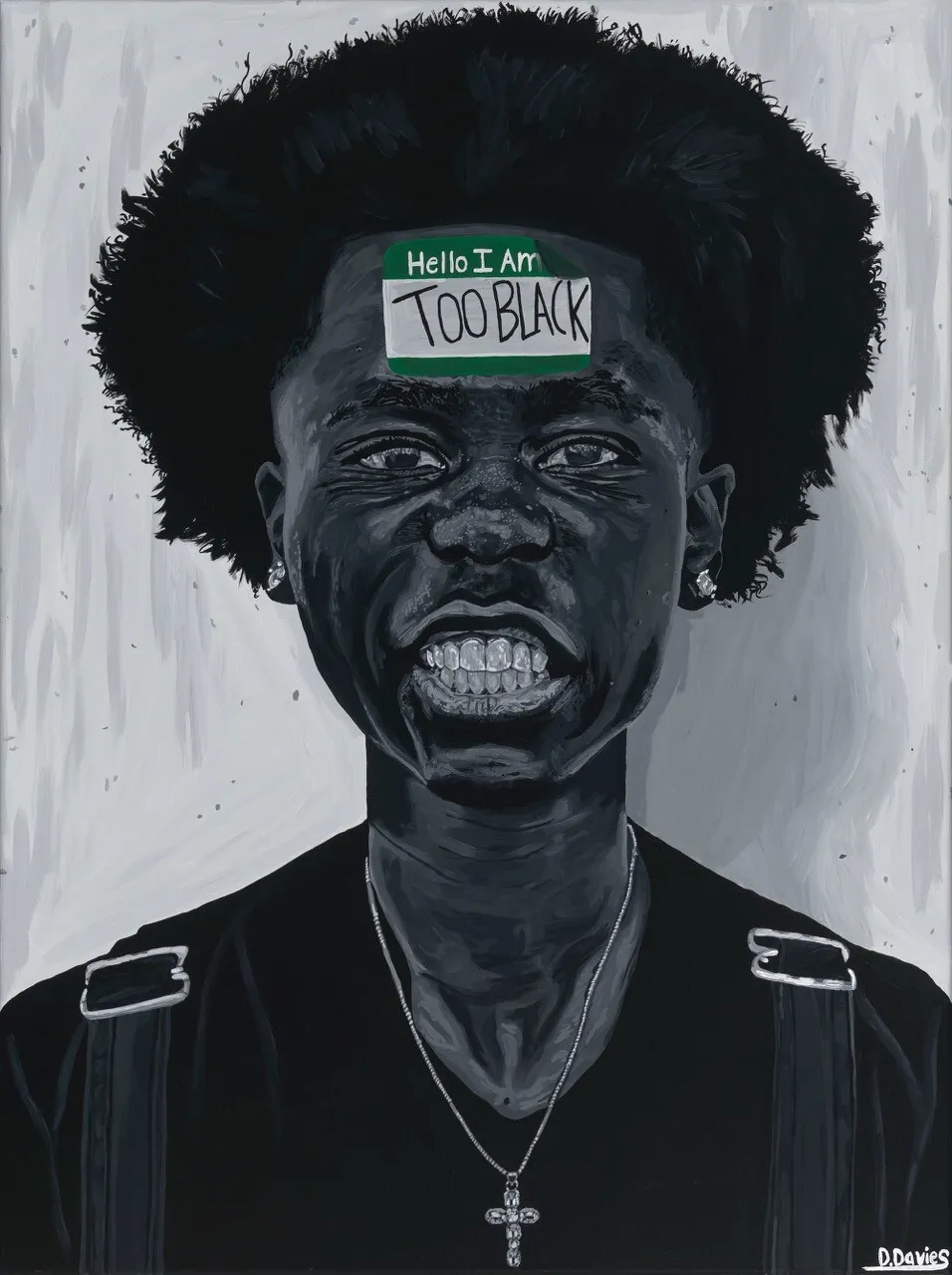
Painting freedom: Derick Davies on Blackness, Oakland and the art of becoming
AI bias rating
Rated Center-left on a five-point scale from left to right.
- Left
- Center-left
- Center
- Center-right
- Right
Why this rating
- The piece is an admiring arts profile and Q&A published by the San Francisco Bay View. The writer openly praises the subject throughout.
- It places the young artist in the lineage of the Black Panther Party and Emory Douglas, tying personal art to a radical political tradition.
- The interviewer repeatedly steers toward the label 'revolutionary' and supplies the word 'free.' The artist himself is more hesitant about these framings.
- The closing editorial passage frames drug abuse, police violence and social media as struggles that art should give a 'visual language to invoke change'. This adds a social-justice lens beyond what the artist states.
- Colorism and the emotional expectations placed on Black men are presented through the artist's first-person experience.
- There is no independent critical assessment of the artwork from critics, curators or other artists.
- Other views on the political meaning of 'revolutionary' art are not included, nor are views on the Black Panther Party legacy invoked.
- The police-car painting and the mention of police violence appear without any context or other viewpoints.
West Oakland artist Derick Davies paints colorism, mental struggle, public suffering and Black self-love with the honesty of someone refusing to hide. In this Q&A, the 19-year-old artist talks about…
AI summary
In a Q&A for the San Francisco Bay View, journalist Leah Harmony interviews Derick Davies, a 19-year-old painter from West Oakland, as Oakland marks the 60th anniversary of the Black Panther Party. Davies, a graduate of Oakland School for the Arts now studying art on a full scholarship, works mainly in acrylic and oil and draws on comic books, music, Bay Area wall art, social media and everyday life. He describes paintings including “Reflect,” about hidden hardship and the pressure on Black men not to show emotion; “Say No to Drugs,” inspired by seeing fentanyl's effects after moving to San Francisco; and “This Light Enough For You?,” which turns childhood taunts about his dark skin into pride. He says whether his art is revolutionary is for the people to decide, places an artist's responsibility on how they live, and defines success as living fully off his art and supporting his family and community. He also painted his first mural at Destiny Arts Center. Harmony writes that Davies gives struggle a visual language and says young Oakland artists' responsibility is to tell the truth about their own time.
- As Oakland marks the Black Panther Party's 60th anniversary, the San Francisco Bay View published Leah Harmony's interview with Derick Davies, a 19-year-old West Oakland painter studying art in college on a full scholarship.
- Derick Davies' painting “This Light Enough For You?” reclaims childhood taunts about his dark skin; he says he is now proud of his skin, his teeth and the label.
- Derick Davies says his painting “Say No to Drugs” was inspired by seeing people affected by fentanyl after moving to San Francisco, which recalled his parents' warnings about drugs.
- Asked if his work is revolutionary, Derick Davies says that is for the people to decide, and that an artist's responsibility lies more in how they live than in the art itself.
- Derick Davies defines success as living entirely off his art and supporting his family, siblings and community, and wants his work seen across the country and the world.