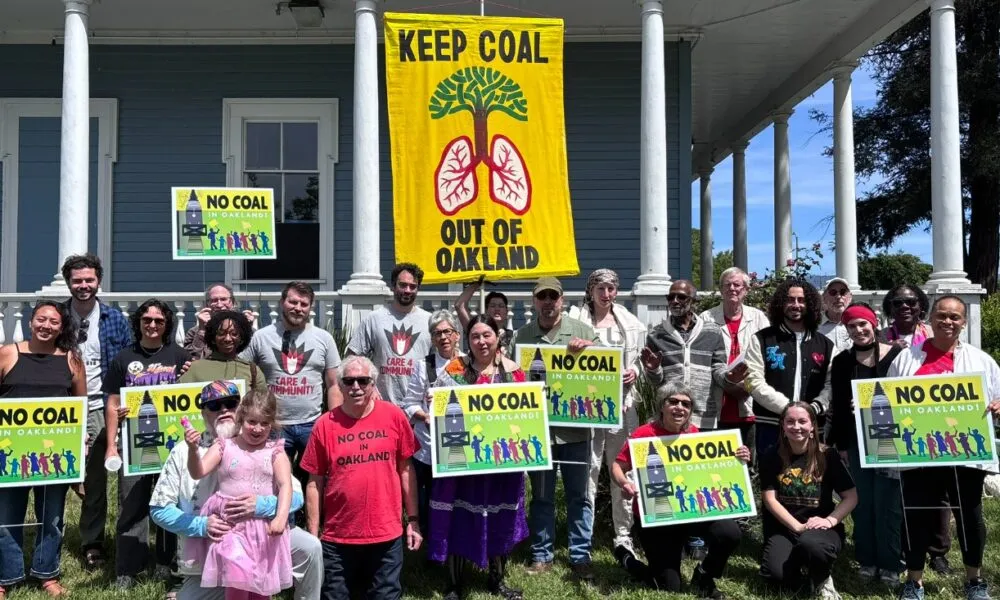
Oakland Coal Terminal Backed by Trump Would Be Bigger, Dirtier Than Promised, Says Report
AI bias rating
Rated Left on a five-point scale from left to right.
- Left
- Center-left
- Center
- Center-right
- Right
Why this rating
- The headline and lead stress that the project is 'bigger' and 'dirtier' than promised, framing the developers as having misled the public.
- The project is repeatedly tied to President Trump, which politicizes it.
- Opponents (No Coal in Oakland, Earthjustice) receive extensive quotes and the last word; no developer or supporter is quoted.
- The narrative voice states as settled fact that 'Research has shown that coal terminal operations can be dangerous to public health,' without citing a source.
- The AB 40 law is presented as a 'major legal hurdle' that was specifically designed to block the project.
- The article ends by promoting an opposition activist's column.
- Developer Phil Tagami or the project's representatives responding to the report's findings.
- The Rural Utah Infrastructure Coalition or Savage Cos. explaining their plans.
- Trump administration or Energy Department comment on the cost and timeline discrepancies.
- Economic arguments for the terminal, such as jobs or revenue for Oakland and the Utah counties.
- Independent experts on coal dust mitigation or on demand in the coal export market.
A recent feasibility study commissioned by potential investors says an Oakland coal terminal backed by President Donald Trump could export 13 million tons a year — three times the amount estimated…
AI summary
A feasibility study commissioned by the Rural Utah Infrastructure Coalition, eight Utah counties weighing a roughly $43 million investment, says the Trump-backed West Gateway coal terminal in Oakland could export about 13 million tons a year, three times the earlier environmental review's estimate. Produced in July by Norda Stelo and Wood Mackenzie and released this month, the report says coal would sit in two open-air bunkers, not the covered terminal developers promised. It also includes dustier Powder River Basin coal and does not mention covered rail cars. It puts the cost at $430–625 million, against an Energy Department estimate of about $231 million, and the build time at 53 months, later than Trump's promise of exports from 2028. Trump announced a $75 million investment in June. Opponents, including No Coal in Oakland's Ted Franklin and Earthjustice's Colin O'Brien, say the project would worsen pollution in West Oakland and is bigger and dirtier than disclosed. Franklin says it lacks major financing. A new state law, AB 40, signed Sept. 30, requires a full environmental impact report before such facilities can operate.
- A feasibility study released this month for eight Utah counties says the Trump-backed coal terminal planned in Oakland could export about 13 million tons of coal a year, three times an earlier environmental review's estimate.
- The study says the coal would be stored in two open-air bunkers, contradicting developers' promises of a covered terminal, and it does not mention covering rail cars.
- The study says the Oakland terminal would also handle dustier Powder River Basin coal from Wyoming and Montana, not only high-grade Utah coal as project officials had said.
- The study estimates the Oakland coal terminal would cost $430–625 million, compared with an Energy Department estimate of about $231 million, and would take 53 months to build.
- California's AB 40, signed into law on Sept. 30, requires large-volume bulk coal facilities to complete a full environmental impact report before operating; the article says it was designed to block or delay the Oakland coal terminal.